Homemade Ratatouille Recipe: A Flavorful Dish
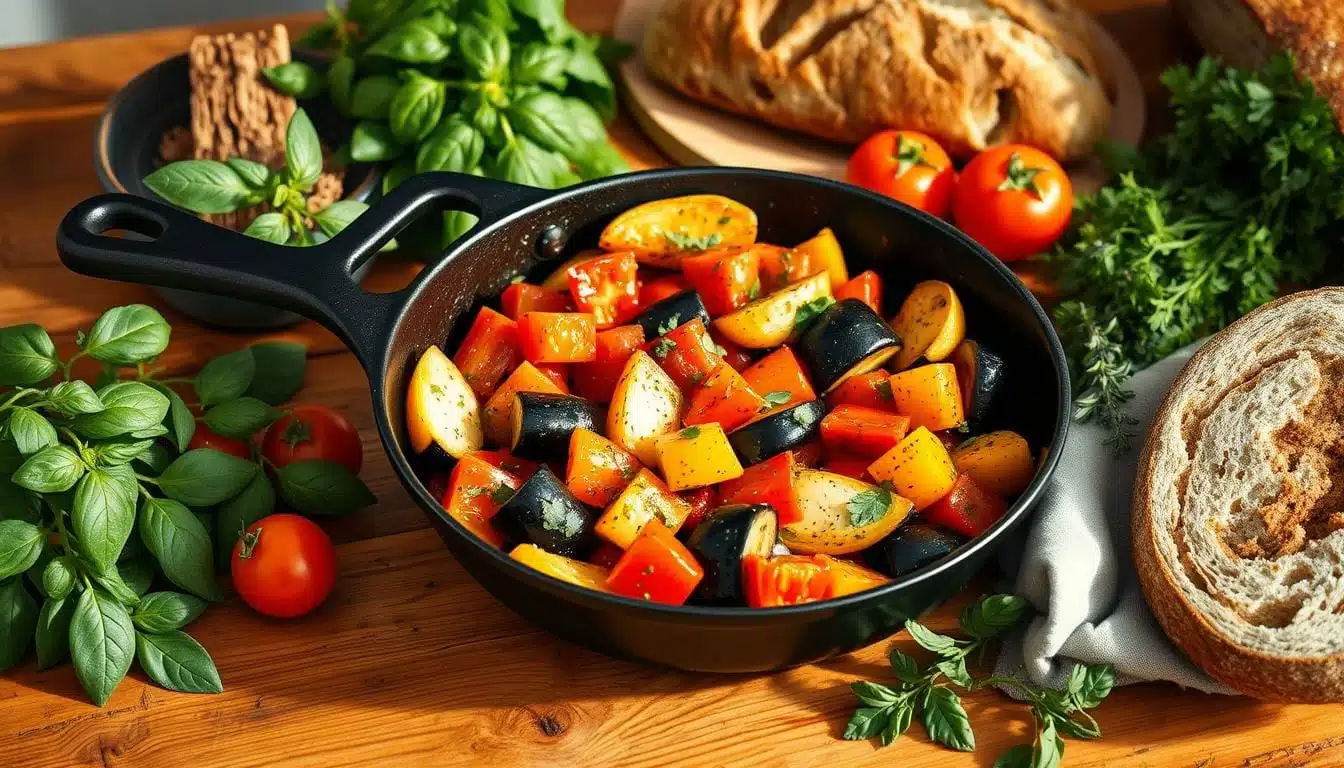
Summer vegetables come together in a magical way in ratatouille. Eggplant becomes soft, peppers sweeten, and zucchini adds crunch. This dish fills your home with warmth and comfort.
It serves 8 people, each enjoying 304 calories of real flavors. The slow simmer brings out the best in olive oil and garlic. It’s perfect for family dinners or sharing with friends. Let’s cook something comforting together.
FAQ
Can I add meat to ratatouille?
Traditional ratatouille is vegetarian, but you can add meat. Grilled chicken or fish with ratatouille makes a heartier meal.
What are some creative ways to serve leftover ratatouille?
Use leftover ratatouille as a pasta sauce, crepe filling, or in soup. It’s also good on baked potatoes or in omelets.
Is ratatouille a healthy dish?
Yes! Ratatouille is low in calories and full of nutritious veggies. It’s a healthy, satisfying dish that’s good for you.
Can I make ratatouille ahead of time?
Yes, ratatouille is perfect for making ahead. It tastes better the next day, making it great for meal prep or gatherings.
What is the best way to reheat ratatouille?
Reheat ratatouille on the stovetop over medium-low heat. Add water or broth if needed. You can also use the microwave or oven for larger portions, ensuring it’s heated through without overcooking.
How can I add more flavor to my ratatouille?
Add fresh herbs like basil and thyme, and don’t forget the seasoning. A bit of red pepper flakes or balsamic vinegar can also enhance the flavors.
Can I use herb blends instead of fresh herbs?
Yes, dried herb blends like herbes de Provence are convenient. Just remember to use less, as they’re more concentrated than fresh herbs.
What is Ratatouille?
When I first learned about Classic Ratatouille, I was amazed. It’s a simple dish with a big story. It started in Provence, where farmers celebrated summer’s harvest. They used eggplant, tomatoes, peppers, and zucchini.
The verbe “ratouiller” means to stir, but they actually layered the vegetables. This way, each kept its flavor. It was a dish made from the earth’s gifts.
Traditional Ingredients Used
- Eggplant – adds meaty texture and depth
- Zucchini and yellow squash – bring crispness and subtle sweetness
- Bell peppers (red, orange, or yellow) – pops of color and natural sugars
- Tomatoes – the base for its tangy sauce
- Onion and garlic – foundational aroma
- Olive oil – the golden binder holding it all together
- Herbs like thyme and basil – finishing touches for freshness
A Healthy Ratatouille Recipe relies on these natural ingredients. Each veggie adds vitamins and fiber. For example, eggplant has potassium, and bell peppers have vitamin C. Olive oil is good for your heart.
My secret? Sear each veggie to keep its juices in, then layer them carefully.
Pro tip: Choose firm, unblemished veggies. A ripe tomato and crisp zucchini make a big difference. I always look for freshness when I shop. This way, I get a dish that’s both cozy and light, great for any time of year.
Ways to Celebrate Its Legacy
Bring Ratatouille’s heritage into your kitchen with these Ratatouille Meal Ideas:
- As a base for veggie-packed omelets
- In baked eggs for a brunch surprise
- Mixed into grain bowls for weeknight warmth
| Meal | Pairing Idea |
|---|---|
| Lunch | Serve over quinoa with a squeeze of lemon. |
| Dinner | Top with crumbled feta and fresh basil. |
| Weekends | Spread on grilled sourdough for open-faced sandwiches. |
Try it as a side, a base, or even in soup.
Essential Ingredients for Ratatouille
Let’s gather the colorful Ratatouille Ingredients that make this dish stand out.
Vegetables to Include
- Eggplant: 1 medium-large globe eggplant, cubed. Look for firm skin without soft spots—it adds a meaty texture.
- Zucchini & Squash: 2 medium zucchinis (8 oz each) or yellow squash. Choose firm ones that snap when bent.
- Bell Peppers: 1 red or yellow pepper, diced. Sweet varieties balance acidity and add vibrant color.
- Tomatoes: 1 lb ripe tomatoes (3-5 medium). Roma tomatoes work best for their low acidity.
- Onion: 1 medium yellow onion, sliced thinly. It forms the dish’s aromatic base.
- Mushrooms (optional): 2 cups sliced. Adds earthy depth if desired.
These vegetables create a mix of textures—crisp, tender, and juicy. They all come together in one pot. This makes a hearty Vegetarian Ratatouille that’s both comforting and light.
Herbs and Spices that Enhance Flavor
Start with 3 minced garlic cloves—they’re the aromatic heartbeat of every batch I make. Next, 2 teaspoons of dried parsley lay the green foundation. Here’s my go-to lineup:
- Thyme: Its earthy floral notes tie all the veggies together.
- Basil: Fresh leaves added at the end add a bright, fragrant lift.
- Herbes de Provence: A store-bought blend of savory, marjoram, and rosemary cuts prep time without sacrificing authenticity.
For heat, a pinch of red pepper flakes warms without burning. Salt and pepper are layered in every step to build depth. And don’t overlook sugar—a tiny sprinkle tames tomato acidity like magic.
Step-by-Step Instructions for Homemade Ratatouille
Start by preparing the vegetables, the heart of this Easy Ratatouille Recipe. Cut eggplant into ½-inch cubes and sprinkle with salt. Let it sit for 20 minutes to remove bitterness. Then, dry it with a towel for tender results.
Next, slice zucchini and yellow squash into ¼-inch half-moons. Bell peppers are deseeded and cut into strips, matching the other veggies’ size. Uniform slices ensure even cooking. A mandoline slicer helps if you have one.
- Tomatoes: Dice 2 pounds into chunks—mix heirloom and Roma varieties for depth.
- Onions: Slice into half-rings. They’ll caramelize beautifully during cooking.
- Garlic: Mince 4 cloves finely. A microplane grater works wonders here.
Pro tip: Patting veggies dry after washing keeps them crisp-tender when roasted. Store leftovers in an airtight container for up to 4 days—this dish actually improves after a day’s rest! Ready to move to the stovetop? Next steps await in the next section—your kitchen will smell like Provence in no time.
other Instructions for Homemade Ratatouille
Let’s dive into the heart of Ratatouille Cooking Instructions.
- Eggplant First: Sauté in 2 tbsp olive oil until golden (10-15 mins). This step avoids bitterness and ensures tenderness.
- Zucchini Next: Quick sauté for 3-5 mins. to keep a slight crunch—overcooking here leads to mushy results.
- Layer Flavors: Onions and peppers cook together until caramelized (8-10 mins.), then add garlic for a fragrant base.
- Simmer & Combine: Add tomatoes and herbs, letting them meld for 8-10 mins. before layering all cooked veggies back into the pot.
| Vegetable | Cook Time | Oil Used |
|---|---|---|
| Eggplant | 10-15 mins | 2 tbsp olive oil |
| Zucchini/Yellow Squash | 3-5 mins | 1 tbsp olive oil |
| Peppers/Onions | 8-10 mins | 1 tbsp olive oil |
Pro tip: Use a mandoline slicer for even ½-inch cubes—this cuts prep time by 30% and ensures even cooking. Remember, the goal is balance—each veggie gets its moment to shine before coming together as one.
bonus suggestions for Homemade Ratatouille
There’s a quiet joy in making ratatouille. You can go for a rustic look or a perfect layered dish. I’ll show you both ways, blending tradition with your personal touch.
The Classic Ratatouille method is all about layering. Start with crushed tomatoes, then add eggplant, zucchini, and peppers in rows. Drizzle olive oil and sprinkle thyme before baking. This method makes a dish that’s as stunning as it is cozy.
Or, you can try the traditional way. It involves sautéing veggies and mixing them in a pot. This way, flavors blend while keeping the veggies’ texture. Both methods capture the heart of the Homemade Ratatouille Recipe.
- Layered Style: Use a mandoline to slice veggies thinly. Arrange them in a pattern of eggplant, zucchini, and bell pepper. Bake at 350°F for 45 minutes.
- Stovetop Method: Cook veggies in tomato sauce. Add garlic, bay leaf, and a bit of sugar to balance the flavors.
Pro tip: Let each layer rest for 10 minutes after cooking. This lets the juices spread evenly.
Tips for the Perfect Ratatouille
Learning Ratatouille Cooking Instructions means knowing when to cook each veggie.
- For the stovetop, start with eggplant for 10-15 minutes. It cooks well for longer. Zucchini cooks quickly, in 3-5 minutes. After cooking each veggie a bit, simmer them together for 10-15 minutes. This blends flavors without overcooking.
- In the oven, bake at 350°F (175°C) for 45 minutes. Use parchment to keep colors bright and textures perfect.
A pro tip: Arrange veggies in the pan by cooking time. Start with eggplant, then zucchini and peppers. Save tomatoes for last to keep their juices in.
| Vegetable | Stovetop Time | Oven Time |
|---|---|---|
| Eggplant | 10-15 mins | 25 mins (roast first) |
| Zucchini/Yellow Squash | 3-5 mins | Final 10 mins with others |
| Peppers | 3-4 mins after onions | Full 45 mins |
| Tomatoes | Last 10-15 mins | Entire bake time |
Adjust cooking times based on veggie size. Smaller pieces cook faster.
Variations of Ratatouille
Classic Ratatouille vs. Modern Twists
The original Classic Ratatouille combines sautéed veggies like eggplant, zucchini, and peppers. But today, chefs add their own twist, like béchamel-laced casseroles or layered tians inspired by Remy’s movie magic.
- Try layering eggplant with béchamel for a creamy gratin
- Top pasta or rice bowls with the stew for a veggie-packed meal
- Blend it into omelettes or stuff into hollowed veggies
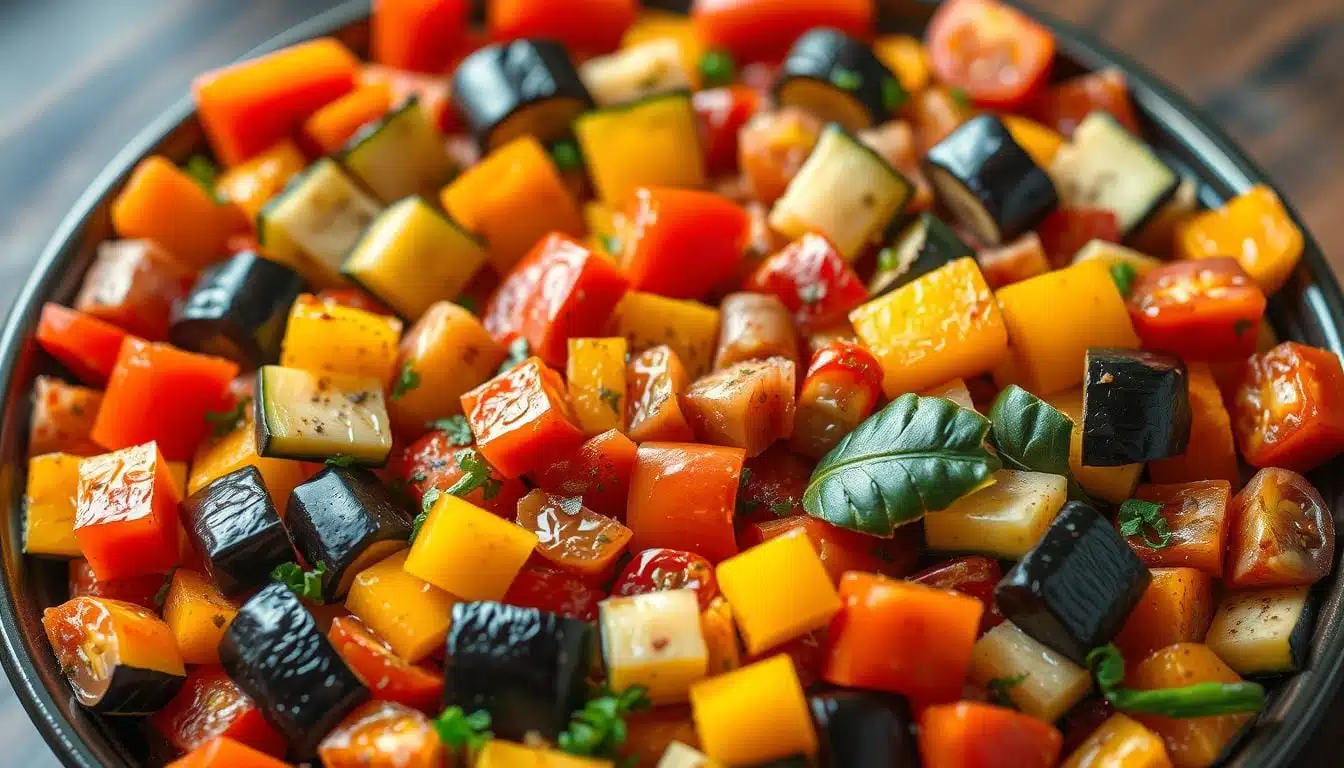
Vegetarian and Vegan Options
Begin by leaving out the cheese, like Parmesan. Use nutritional yeast instead for a cheesy flavor. Here’s a simple guide:
- Use olive oil only—no butter needed
- Add ¼ cup nutritional yeast for umami depth
- Pair with a side of quinoa or lentils for extra protein
For a lighter meal, serve it with roasted chickpeas.
Serving Suggestions for Ratatouille
As a Ratatouille Meal Ideas go-to, this vegetable medley pairs beautifully with simple staples. Here’s how I like to serve it:
- Classic Side: Let it shine as a Ratatouille Side Dish with crusty bread to soak up its juices.
- Main Event: Spoon over pasta, polenta, or rice for a hearty main course.
- Light Lunch: Topped with a fried egg for a protein-packed brunch option.
- Party Ready: Serve as crostini toppings for an easy appetizer.
- Gluten-Free: Pair with quinoa for a satisfying, diet-friendly meal.
| Meal Type | Pairing Idea |
|---|---|
| Side Dish | Crusty bread or baguette |
| Main Course | Over pasta with Parmesan |
| Light Meal | With fried eggs for brunch |
| Gluten-Free | Quinoa or steamed rice |
Storing and Reheating Ratatouille
Keeping your Homemade Ratatouille Recipe fresh is key.
Proper Storage Methods
- Put cooled ratatouille in airtight glass containers. They keep flavors fresh and block odors.
- Split big batches into single servings for easy reheating.
- For freezing, cover with parchment paper to avoid freezer burn.
| Storage Method | Duration |
|---|---|
| Refrigerator | Up to 4 days |
| Freezer | 3 months |
Storing your Homemade Ratatouille Recipe right makes it a weeknight hero. When freezing, mark containers with dates to know when they were made. Thaw in the fridge before reheating.
Reheat in a 350°F oven until it’s warm. Never microwave on high to keep the texture right.
- Stovetop Revival: Begin with a saucepan on medium-low heat. Add broth if it seems dry. Stir every 2 minutes until it’s warm, keeping veggies tender.
- Microwave Magic: Heat in 30-second bursts in a microwave-safe bowl. Cover with a plate to prevent drying and ensure even heating.
- Oven Care: Bake at 350°F for 15 minutes in a covered dish. This is great for larger portions or a crispy finish.
Transform leftovers into new Ratatouille Meal Ideas! Mix with pasta, layer in a frittata, or blend into soup. My go-to? Stuffing sweet potatoes with ratatouille for a cozy lunch.
- Add to omelets or frittatas for breakfast
- Mix with couscous for a quick dinner
- Top bruschetta or crostini for appetizers
Freeze portions in airtight containers for up to 3 months. Thaw overnight in the fridge before reheating.
Nutritional Benefits of Ratatouille
Thinking of the Healthy Ratatouille Recipe makes me think of its health benefits. It’s packed with eggplant, zucchini, and bell peppers, all low in calories.
Low-Calorie Ingredients
This recipe has just 181 calories per serving. It’s light yet feels indulgent. The veggies provide fiber and vitamins, while olive oil adds healthy fats.
- Vegetable power: 60% of calories come from nutrient-dense veggies.
- Fiber-rich: 9g per serving aids digestion and keeps you full longer.
- Healthy fats: Olive oil’s mono unsaturated fats support heart health.
- Low sodium: Only 643mg per serving, perfect for mindful eating.
| Nutrient | Per Serving |
|---|---|
| Calories | 181 |
| Protein | 5g |
| Fat | 8g (5g monounsaturated) |
| Fiber | 9g |
| Vitamin C | 72mg (86% daily value) |
| Potassium | 1021mg |
- Tomatoes: Full of lycopene, which is good for your heart and can help prevent cancer.
- Bell peppers: They’re loaded with vitamin C, giving you over 63% of what you need in one serving.
- Zucchini: It’s rich in vitamin A for your eyes and manganese for metabolism.
- Eggplant: It has nasunin, an antioxidant that protects cells from harm.
Now, let’s see the numbers:
Vitamin C (72mg)—63% of daily needs
Potassium (1021mg)—22% of daily needs
Fiber (9g)—26% of daily needs
Olive oil is also important! Its healthy fats are good for your heart. A single serving of this dish gives you almost 10% of your vitamin A needs. These nutrients help boost your immune system, fight inflammation, and keep your energy up.
Common Mistakes to Avoid
Vegetables in an Easy Ratatouille Recipe need care. Here’s a key rule: never cook them all at once. Each vegetable cooks differently:
| Vegetable | Time | Goal |
|---|---|---|
| Zucchini | 3–5 mins | Soft but crisp-tender |
| Eggplant | 10–15 mins | Golden-brown edges |
| Peppers | 8–10 mins | Soft yet slightly firm bite |
Avoid these mistakes:
- Crowding the pan—leave space for even cooking
- Using high heat throughout—lower heat preserves natural sugars
- Ignoring texture checks every 2–3 minutes
Let’s talk about why every vegetable and herb matters. No exceptions.
- Zucchini—crispness and subtle sweetness
- Eggplant—its meaty texture balances acidity
- Bell peppers—provide natural sweetness
- Tomatoes—base of the sauce, never substituted with canned
- Garlic and onion—build the dish’s savory foundation
Thyme and basil are more than garnish. They tie flavors together. Olive oil is key for letting vegetables caramelize. Too little, and the dish lacks depth.
Skipping eggplant removes heartiness. Omitting bell peppers weakens balance. Even herbs add layers you can’t replicate with shortcuts. Trust us—the Classic Ratatouille was perfected over centuries. Let’s keep its magic alive.
Frequently Asked Questions about Ratatouille
Many readers have asked about using frozen vegetables in their Ratatouille Ingredients. I’ve found that frozen veggies can be a good substitute, but with some tweaks. Here’s how to make your Easy Ratatouille Recipe still delicious:
Can I Use Frozen Vegetables?
- Stick to frozen bell peppers and onions—they hold texture best after thawing.
- Avoid frozen eggplant and zucchini. They’ll turn soggy when cooked, losing their crispness.
- Thaw and drain veggies thoroughly before adding to the pan. Excess moisture dilutes the flavor.
- Cook frozen veggies for less time—blanched veggies are already partially cooked!
- Pair fresh tomatoes and eggplant with frozen peppers for a happy medium.
Frozen options can save time, but fresh Ratatouille Ingredients are the best. The vibrant colors and juices from fresh eggplant and zucchini make the dish unforgettable. But, if you’re short on time, this Easy Ratatouille Recipe still works well with smart swaps. Let your ingredients guide you, and enjoy the process!
Wondering how to keep your Homemade Ratatouille Recipe fresh? Let’s break it down. This veggie-packed dish stays tasty for days when stored right.
How Long Does Ratatouille Last?
Keep it in an airtight container in the fridge for 4–5 days. Freeze it in portions for up to 3 months. It thaws perfectly for quick meals later.
My favorite trick? Portion leftovers into containers right after baking. That way, reheating is a breeze.
- Refrigerate in airtight containers for up to 5 days.
- Freeze in labeled bags or containers for up to 3 months.
Need Ratatouille Meal Ideas? Stir leftovers into pasta, layer on toast, or serve over grains. My family enjoys it chilled with a drizzle of olive oil for lunch. Thawed portions work great in frittatas or omelets too.
Pro tip: Label frozen batches with dates so you know what’s ready to enjoy. This makes meal prep stress-free and cuts down on waste.
Conclusion: Enjoying Your Homemade Ratatouille
Watching simple ingredients turn into a dish is magical. Your Easy Ratatouille Recipe is more than a meal—it’s a canvas for creativity. It’s perfect for sharing with loved ones or for solo adventures.
“This ratatouille recipe is my favorite way to make the classic French stew. It’s rich and flavorful, filled with late summer vegetables like eggplant, tomatoes, peppers, and zucchini.”
Ratatouille Meal Ideas for Every Occasion
Enjoy it with crusty bread for a rustic lunch or with grilled proteins like chicken or fish. For a comforting dinner, try it over spaghetti or couscous. Leftovers are great in frittatas or as a warm salad base.
Remember, it tastes even better the next day. This dish invites you to explore new combinations. Whether you stick to the recipe or add your twist, it’s a dish that grows with you. Happy cooking—and bon appétit!