Authentic Lebanese Fattoush: A Delicious Salad
A bowl of Authentic Lebanese Fattoush is truly magical. Crunchy pita chips mix with peppery greens, tangy lemon, and fragrant herbs. It’s more than a salad; it’s a warm hug from the Middle East. Fattoush is a traditional Middle Eastern salad filled with love, not perfection.
FAQ
What is Authentic Lebanese Fattoush?
Authentic Lebanese Fattoush is a traditional Middle Eastern salad. It combines fresh veggies, crispy pita bread, and herbs. The dressing is zesty and flavorful, showing the heart of Lebanese cuisine.
Are there any health benefits to eating Lebanese Fattoush?
Yes! Fattoush is full of vitamins, minerals, fiber, and antioxidants. It supports digestion and provides essential nutrients. Plus, it’s low in calories.
How do I make the perfect Lebanese Fattoush dressing?
The perfect Fattoush dressing mixes extra virgin olive oil, lemon juice, and sumac. Crushed garlic adds warmth and depth. It’s key to this authentic Lebanese dish.
Can I customize the ingredients in my Fattoush?
Absolutely! Traditional Fattoush has its ingredients, but you can add your own twist. Use seasonal veggies and adjust herbs to your liking. Make it your own!
What are some popular variations of Fattoush dressing?
You can try adding pomegranate molasses for sweetness or cinnamon for warmth. Some like dried mint or crushed red pepper for a kick. Find your favorite mix!
How do I store leftover Fattoush?
Store leftover Fattoush by keeping the dressed veggies and pita bread separate. Use shallow, airtight containers for the veggies. Add the pita just before serving to stay crunchy.
Can Fattoush be served as a main dish?
Yes! Fattoush can be a main dish, especially with grilled meats or dips like hummus. It’s a light yet satisfying meal.
Is Fattoush popular in cuisines outside of Lebanon?
Yes! Fattoush is loved worldwide, especially in places with Lebanese food. Chefs add local touches while keeping its true flavor.
How can I make my Fattoush more flavorful?
To make Fattoush more flavorful, toast the pita until golden. Add it to the salad just before serving. Use fresh, quality ingredients and plenty of herbs for the best taste.
What is Fattoush?
Let me invite you to discover the soul of authentic Lebanese dish cherished across generations. Born from repurposing stale pita, this rustic creation turns humble ingredients into a vibrant celebration of freshness and tradition. Imagine crisp lettuce, tangy sumac, and toasted bread fragments coming together like old friends.
A Brief Overview of the Salad
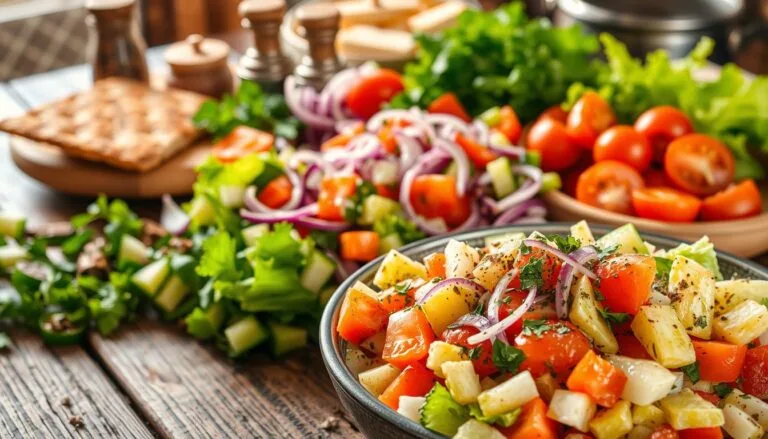
Picture a plate piled with romaine, radish, and cucumber—each bite a crunch of life. Fattoush’s soul lies in its balance: herb-forward with a zesty olive oil dressing. The star? Crispy pita chips, a nod to turning scraps into something extraordinary. This authentic Lebanese dish teaches us that creativity thrives where others see waste.
Fattoush in Lebanese Culture
In villages and bustling cities alike, Fattoush sits at the heart of shared meals. My grandmother used to say. It’s served at weddings, harvest feasts, and quiet family dinners. Lebanese cuisine honors simplicity, and Fattoush embodies that—proof that nourishment and tradition can coexist in one bowl.
Key Ingredients of Authentic Fattoush
In Mediterranean cuisine, freshness is a promise, not just a choice. Let’s see how these elements come together to create something special.
Fresh Vegetables in Fattoush
The salad’s heart is a rainbow of vegetables. Romaine lettuce is the base, with cucumber, tomato, and radish adding juicy contrasts. Bright bell peppers add sweetness, balancing tangy notes.
The Importance of Herbs
Herbs are the soul of Lebanese Fattoush. Parsley adds earthiness, while mint brings freshness. I tear them by hand, releasing oils that blend with the salad.
The Role of Pita Bread
Pita turns Lebanese Fattoush into a symphony. I crisp it until golden, then break it into shards. Their texture soaks up dressing while staying crunchy.
Preparing the Perfect Fattoush
Making your own homemade Lebanese Fattoush is all about the journey. This healthy salad recipe turns simple parts into a lively whole. It’s all about the careful steps we take.
- First, heat your oven to 375°F. Cut pita into triangles, brush with olive oil, and sprinkle with sumac and salt. Bake until they’re crispy. This part feels like a cozy ritual.
- While the pita bakes, prepare your greens. Use romaine and radicchio. Gently toss them to keep their crunch.
- Next, chop your veggies into half-inch cubes for cucumbers and tomatoes. Thinly sliced onions add a nice touch.
- Put all the ingredients in a big bowl. Hold off on adding herbs and dressing until later to keep them fresh.
My top tip? For a great healthy salad recipe, balance is key. Here’s how to get it right:
- Soak onion slices in ice water for 10 minutes to soften their flavor
- Use scissors to cut herbs like parsley and mint. This keeps their oils in
- Vary the size of your veggies for a nice mix of textures
Dressing Your Fattoush
Let me walk you through how to craft it with care.
Making a Traditional Dressing
Start with a base of extra virgin olive oil—its peppery finish becomes the dressing’s backbone. Squeeze fresh lemon juice for brightness, then whisk in a teaspoon of sumac. This deep-red spice is Lebanon’s secret treasure, adding a tart kiss that defines Lebanese cuisine. Crush a garlic clove into the mix, its warmth grounding the tang.
Popular Variations of Fattoush Dressing
Experiment thoughtfully:
- Pomegranate molasses for a sweet-sour twist
- Cinnamon for a hint of warmth
- Dried mint for earthy depth
Classic vs. Modern Twists
| Ingredient | Traditional | Modern |
|---|---|---|
| Acidity | Lemon + sumac | Lemon + pomegranate molasses |
| Depth | Garlic, olive oil | Garlic + a dash of tahini |
Whisk slowly—let the flavors marry. This ritual isn’t just cooking; it’s a quiet act of love for your ingredients. Serve boldly, knowing every drop elevates your salad’s story.
The Nutritional Benefits of Fattoush
Each fresh ingredient tells a story of care, from the crunch of cucumbers to the tang of sumac.
Low Calorie, Rich in Nutrients
Fattoush reminds us that flavor and nutrition can go together. It’s light yet satisfying, thanks to crisp greens. A serving has about 200 calories, making it great for those looking for a healthy salad recipe.
- Veggies: Bell peppers, tomatoes, and radishes give us vitamins C and A.
- Pomegranate seeds: They’re full of antioxidants and sweetness.
- Olive oil: It adds heart-healthy fats in the right amount.
High in Fiber and Antioxidants
Let’s look at the heroes in this dish:
| Ingredient | Nutrient | Benefit |
|---|---|---|
| Parsley | Vitamin K | Supports bone and blood health |
| Cucumber | Water + fiber | Maintains hydration and digestion |
| Mint | Antioxidants | Acts as a cellular shield against stress |
Choosing fresh ingredients means saying yes to vitality.
Fattoush vs. Other Salads
Let’s see what makes Fattoush unique compared to other salads. For example, Tabbouleh is all about herbs and bulgur, while Fattoush combines crispy pita with fresh greens.
Both are loved by many, but Fattoush’s bold sumac and tangy dressing set it apart.
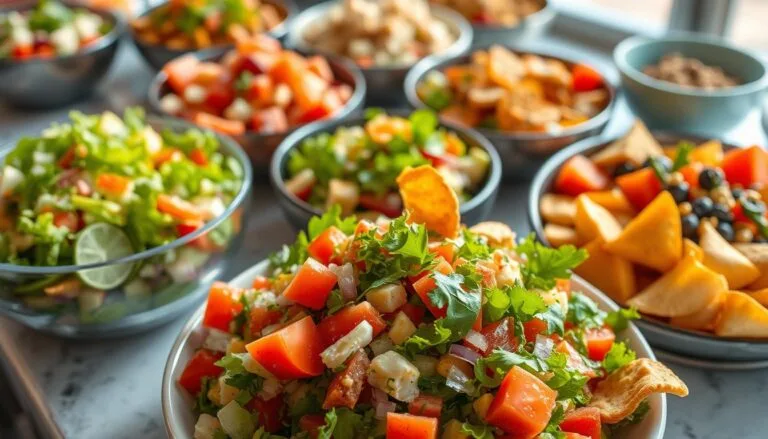
How Fattoush Stands Out
| Salad | Signature Touch |
|---|---|
| Fattoush | Toasted pita + sumac’s tang |
| Tabbouleh | Bulgur + parsley base |
| Greek Salad | Olive oil + feta’s saltiness |
Why Fattoush Feels Familiar Yet New
Fattoush’s mix of textures is intriguing yet not overwhelming. Here’s why it’s so memorable:
- Crisp pita contrasts with tender greens
- Sumac adds a citrusy kick unique to Mediterranean cuisine
- No two bites taste the same!
Fattoush is a traditional Middle Eastern salad that offers comfort and shares heritage stories.
Serving Suggestions for Fattoush
Homemade Fattoush has a special power to bring people together.
Ideal Pairings for Fattoush
Fattoush is the star of your table. But it shines even brighter with the right friends:
- Grilled meats like shish tawook or kafta—the crisp veggies balance rich flavors.
- Warm pita and creamy dips like hummus or baba ghanoush for a full Mediterranean spread.
- Summer meals with fresh flatbreads and chilled mint lemonade for a light, vibrant meal.
Creative Serving Ideas
Let your creativity shine with these simple touches that honor tradition while inviting new possibilities:
- Serve in a rustic wooden bowl—its earthy warmth mirrors the dish’s roots.
- Offer a “build-your-own” platter with toppings like roasted chickpeas or sumac for personalizing.
- Top bowls with a drizzle of olive oil just before serving to keep the pita crisps extra crunchy.
Every bite of this homemade Fattoush is a chance to connect—whether at a picnic or a cozy dinner.
Fattoush Around the World
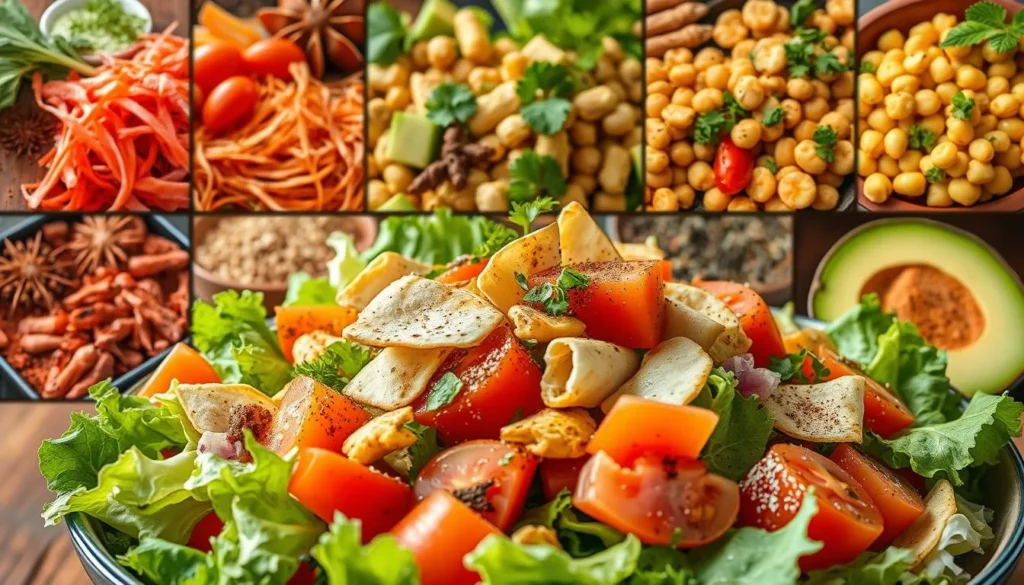
Watching Authentic Lebanese Fattoush spread its wings is truly magical. As a traditional Middle Eastern salad, it connects cultures while keeping its heart intact.
Global Variants of Fattoush
Fattoush’s journey from Beirut to Berlin shows food’s adaptability. Here’s how it’s traveled:
- In Jordan, sumac adds a spicy kick, balanced by fresh mint.
- In Turkey, roasted eggplant softens the salad’s crunch.
- Parisian chefs use sourdough instead of pita, showing tradition meets creativity.
Fattoush’s Popularity in the U.S.
In cities like Los Angeles and Chicago, Fattoush has gained fans. Health enthusiasts enjoy its fresh ingredients. Fusion spots pair it with tacos or grain bowls. At home, friends swap radishes for local greens, showing the salad’s adaptability. For the original recipe, try this trusted guide.
Storing and Leftover Fattoush
When you make homemade Fattoush, the work doesn’t stop after the first bite. Every piece of pita and herb is special.
Here’s how to keep your creation vibrant:
- Keep greens and pita separate in airtight containers. This keeps everything fresh.
- Use paper towels to soak up moisture from cucumbers and tomatoes.
- Put it in the fridge within two hours. Try to eat it within 3–4 days.
Reviving Leftovers with Love
Don’t worry if your Fattoush gets a bit soggy. You can make it new again. Here’s how:
| Issue | Solution |
|---|---|
| Soft pita | Toast new pita pieces and mix with the base |
| Blunted flavors | Stir in extra lemon juice or fresh herbs like parsley |
| Soggy texture | Add crisp veggies like radishes or fresh cucumber slices |
Reimagining Leftovers
Make something new with leftovers:
- Mix with warm bulgur and yogurt for a hearty bowl
- Blend into a dip with tahini and garlic for veggie dippers
- Top with roasted chickpeas for a protein-packed lunch
Every bite of homemade Fattoush has a story. Especially when we make the most of leftovers.
Final Thoughts on Authentic Lebanese Fattoush
As we end our journey into Authentic Lebanese Fattoush, I hope you’ve felt the warmth of Lebanese cuisine. This salad is more than just a dish. It’s a bridge that connects generations and cultures through shared flavors.
Bringing It Home
Don’t be afraid to make your kitchen a place of creativity. Try new herbs or add seasonal veggies. This is how traditions grow.
If you’re interested in more cultural dishes, check out Islamic culinary traditions. Whether it’s for a potluck or a quiet dinner, share Fattoush with care, just like families in Lebanon have for years.
![an image of [pineapple with tajin drawing] dish presented in a table](https://www.passionofcooking.com/wp-content/uploads/2026/01/pineapple-with-tajin-drawing-dish-768x576.webp "How to Create a Perfect Pineapple with Tajin Drawing 4")