
Discover the Authentic Taste of Al Kabsa
There’s a scent that always takes me back to my grandmother’s kitchen—a warm embrace of cumin, cinnamon, and the golden glow of saffron. That’s the magic of Al Kabsa, a dish that feels like a hug from the heart of Middle Eastern cuisine.
FAQ
What is Al Kabsa?
it is a traditional dish from Saudi Arabia. It’s often seen as the national dish. It’s made with basmati rice, meat like chicken or lamb, and spices.
Can Al Kabsa be made in advance?
Yes, you can make Al Kabsa ahead of time. It tastes better after sitting overnight. Keep the rice and meat separate and reheat them gently.
What are the key spices in Al Kabsa?
it uses spices like cardamom, saffron, and cinnamon. Black lime and cloves are also key. These spices give it a unique flavor.
Can I substitute dried black limes (loomi) in the recipe?
If you can’t find black limes, use lime zest and amchoor. This mix adds a tangy flavor similar to black limes.
Is Al Kabsa spicy?
Al Kabsa isn’t spicy in the heat sense. It gets its warmth from aromatic spices. But, some versions might have more chilies.
What types of meat can be used in Al Kabsa?
You can use chicken, lamb, goat, or seafood like fish or shrimp. It depends on what’s available and preferred.
What is the best way to achieve fluffy rice in Al Kabsa?
For fluffy rice, rinse basmati well, soak it briefly, and use the right ratio of rice to liquid. Simmer gently and finish with steam for separate grains.
Where can I find authentic Al Kabsa in the U.S.?
Look for it in cities with big Middle Eastern communities. New York, Los Angeles, Chicago, and Detroit have great spots. Al Ameer in Dearborn and Almarah Restaurant in Los Angeles serve it well.
Are there healthier substitutions for Al Kabsa?
Yes, use brown basmati rice for more fiber. Choose skinless chicken breast for less fat but still plenty of protein. Replace some oil with broth for better nutrition.
What cookbooks do you recommend for learning more about Al Kabsa?
Check out “Arabesque” by Claudia Roden, “The Food of Oman” by Felicia Campbell, and “Middle Eastern Cookery” by Arto der Haroutunian. They offer great insights and recipes.
Let’s Uncover Al Kabsa
A Traditional Arabian Dish
At its heart, Al Kabsa is a Traditional Saudi dish. It blends tender meat, aromatic rice, and a spice mix that feels like a hug. Whether it’s chicken, lamb, or even camel—a nod to Arabian heritage—the rice absorbs the flavors, becoming the star of every bite.
Cultural Significance
Think of it as a symbol of togetherness. In Saudi culture, Al Kabsa is served family-style, encouraging shared plates and laughter. Its presence at weddings, Eid celebrations, or casual gatherings reflects the values of generosity and warmth.
The History of Al Kabsa
This dish is more than a meal; it’s a thread woven into the fabric of Arabian food history.
Origins in the Arabian Peninsula
Bedouin communities first crafted Al Kabsa using whatever the land provided. They mixed dates, spices, and grains with meat cooked over open fires. It was practical yet deeply meaningful—a dish that sustained families through harsh climates and long journeys. Every bite carried the taste of resilience.
Regional Variations
Coastal areas embraced the sea’s bounty, adding shrimp or fish to their Kabsa. Inland, lamb or chicken took center stage. These differences mirror how communities adapted to their surroundings, yet remained united by shared traditions.
Influences from Trade
Trade routes brought saffron from Persia and cardamom from India, enriching Al Kabsa’s flavor palette. Traders and travelers carried stories and spices, blending cultures into this iconic Arabian food. Today, when I stir a pot of Kabsa, I taste those ancient connections.
Key Ingredients in Al Kabsa
Saffron – The Golden Spice
A pinch of saffron threads turns the rice golden and warm. It’s the star that makes the spiced rice special. Families have their own ways of using it, but it’s always magical.
Aromatic Spices Used
Every perfect pot of Al Kabsa has a special spice blend. Here’s what makes it unforgettable:
- Cardamom: sweet and citrusy, like a burst of sunshine
- Cinnamon: cozy and woodsy, wrapping the dish in warmth
- Black lime (loomi): earthy tang that ties everything together
Types of Meat and Seafood
The spiced rice is the star, but the proteins are its best friends. You’ll often find:
| Protein | Flavor Profile |
|---|---|
| Lamb | Deep, savory richness |
| Chicken | Light and tender contrast |
| Seafood | Salt-kissed freshness in coastal versions |
How to Prepare Authentic Al Kabsa
Starting the Kabsa recipe journey requires patience and focus. Each step is a story, like how slow-cooking meat enriches the broth. Let’s explore this process together.
- Start by browning your protein (chicken, lamb, or seafood) in a heavy pot. Sauté onions and garlic until golden, then add tomatoes to deepen the base.
- Whisk in spices like cardamom, cloves, and cinnamon—toast them first for maximum aroma—and let them meld with the meat.
- Simmer the broth for 20–30 minutes until the meat is tender. This step is where flavor magic happens!
Now, it’s time for the rice. Rinse it gently under cold water until the water runs clear. Soak it for 15 minutes to remove excess starch—a secret I learned early on. Combine the soaked rice with the meat broth, cover, and let it steam uncovered at low heat until the grains are plump but distinct.
- Don’t overcrowd the pot—rice needs space to cook evenly.
- Use a heavy pot with a tight lid to trap steam and moisture.
Even seasoned cooks can make mistakes. Overcrowding the pot can cause sticking, and rushing the simmer time leaves rice undercooked. But remember—some say a slightly charred pot bottom is a cherished part of the tradition!
Serving Suggestions for Al Kabsa
Start by placing the dish family-style in a large pot or tray. This lets the golden rice and tender meat stand out.
Traditional Sides and Accompaniments
These sides offer a nice contrast to it’s bold spices:
- Cucumber-tomato salad—crisp and tangy to balance richness
- Mint-laced yogurt sauce for a cooling dip
- Warm pita bread to scoop every last grain of rice
Ideal Beverages to Pair
| Beverage | Description | Pairing Notes |
|---|---|---|
| Arabic Coffee | Cardamom-scented, lightly sweetened | Refreshes the palate between bites |
| Mint Tea | Served in ornate glasses with fresh leaves | Softens the spice intensity |
| Lemonade | Sparkling with fresh citrus | A lighter alternative for guests |
Presentation Ideas
Small touches make meals memorable:
- Garnish with toasted pine nuts and cilantro for vibrant color
- Serve in a marqet (traditional clay pot) for authenticity
- Arrange dishes on a patterned tablecloth to evoke Arabian warmth
Every choice, from mint sprigs to coffee cups, tells a story.
Nutritional Benefits of Al Kabsa
Let’s explore how each part adds up to a healthy meal.
The base of the chicken and rice dish is tender chicken and fragrant basmati rice. Chicken gives you lean protein, and rice gives you slow-burning energy. Together, they keep you full. The spices add flavor and health benefits. Cinnamon and turmeric, for example, have anti-inflammatory effects backed by science.
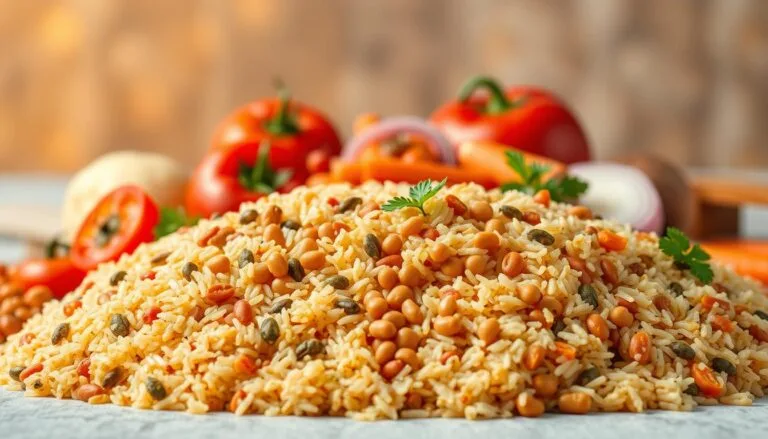
- Swap white rice for brown basmati to boost fiber
- Use skinless chicken for lighter protein
- Cut oil by sautéing veggies first, then adding broth
Let’s talk numbers. A standard serving (1.5 cups) has 400–500 calories. It’s great for eating mindfully. Here’s a quick comparison:
| Option | Calories |
|---|---|
| Classic Al Kabsa | 450–500 |
| Vegetarian Lentil Variation | 350–400 |
For those watching their diet, diabetic-friendly swaps like quinoa or sweet potatoes can make it healthier. Every change keeps the dish’s essence while boosting your health.
Where to Experience Al Kabsa in the U.S.
Top Restaurants for Authentic Cuisine
Across the country, these restaurants serve Al Kabsa with love:
- Al Ameer in Dearborn, MI—where chefs keep family recipes alive.
- Almarah Restaurant in Los Angeles—brings Gulf flavors to life.
- Ariana in Houston—offers Qatar’s version with tender lamb and spices.
Food Festivals Celebrating Middle Eastern Cuisine
Experience more than just food at these festivals:
- Phoenix Arab American Festival—enjoy it with music and stories.
- Minneapolis Middle Eastern Festival—celebrates with family recipes and community spirit.
Online Delivery Options
For those who love convenience, these services are perfect:
Order from Goldbelly for Al Kabsa delivered to your home. Stores like Kalustyan’s and The Spice House offer spice kits for making it yourself. It’s easy and fun.
Cooking Al Kabsa at Home
Let’s make your own Kabsa recipe together.

- A sturdy pot like a Dutch oven mimics the traditional qidra, locking in flavors as the rice simmers.
- A mortar and pestle gently crush spices to release their essence—try grinding cardamom or cloves this way.
- Sharp knives for chopping onions and herbs ensure even cooking.
Finding authentic ingredients is now easier than ever. Local Middle Eastern markets carry black limes and saffron. Online retailers like Penzeys Spices or Amazon deliver them to your door. Try swapping chicken for shrimp for a lighter twist.
Try these variations to make it your own:
- Add dried apricots for a touch of sweetness inspired by Saudi traditions.
- Swap meat for chickpeas and eggplant to create a vibrant vegetarian version.
- Drizzle with a lime-tomato sauce for a Qatari-style finale.
C/C
Common Queries
Can you make Al Kabsa ahead of time? Yes! It tastes better when made a day before. Keep rice and meat separate to avoid sogginess. Reheat with a bit of water for the right texture.
What if you can’t find black limes? Use lime zest and a bit of amchoor for that tang. Traditional it uses cumin and cardamom, not chili. But some Gulf areas like it spicier.
Tips for Beginners
Start with chicken for easier Al Kabsa mastery. Its cooking time matches rice better than lamb. Take your time to avoid ruining the flavors.
If rice sticks, don’t worry. Practice makes perfect. And always toast your spices—they’re the heart of this dish.
Where to Find More Resources
For inspiration, check Claudia Roden’s Arabesque or Felicia Campbell’s The Food of Oman. The Spruce Eats has step-by-step photos. YouTube channels like Gulf Kitchen Creations show how it’s done.
![an image of [tajin chamoy] dish presented in a table](https://www.passionofcooking.com/wp-content/uploads/2026/01/tajin-chamoy-dish-768x576.webp "Tajin Chamoy: The Vibrant Mexican Condiment Combination 4")