
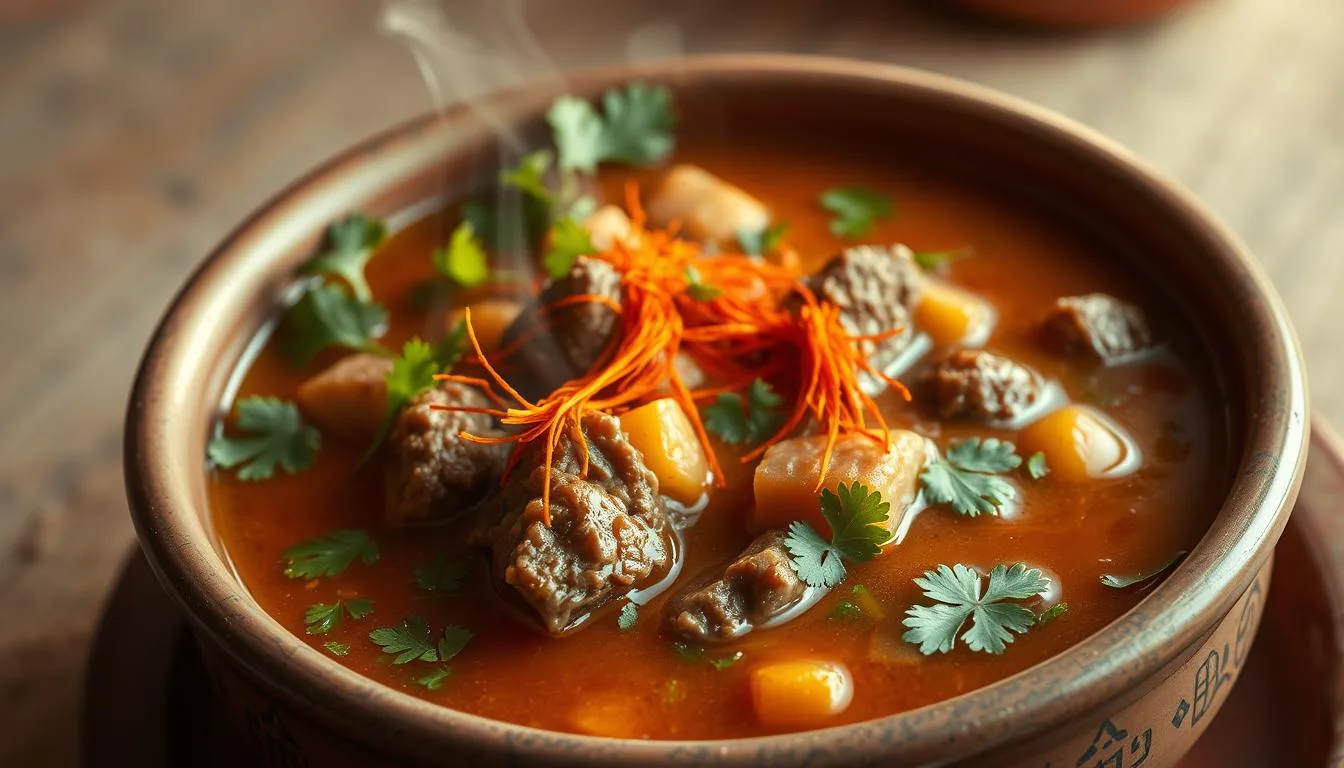
Harira: Savor the Taste of Traditional Moroccan Soup
A bowl of Harira is deeply comforting. Its steam carries the scent of cumin and cinnamon. I remember my grandmother’s kitchen during Ramadan, where the pot simmered for hours.
The soup was thick with lentils and chickpeas. The whole family waited eagerly. it isn’t just a meal—it’s a promise of warmth, connecting generations.
Whether you’re breaking your fast or seeking a nourishing meal, it invites you into a world of flavors. These flavors have sustained communities for centuries. Let’s explore how this Moroccan soup—with its traditional recipe of earthy legumes and spice blends—can become your own source of comfort.
Every spoonful holds a story. Today, I want to share its magic with you.
What is Harira?
it is more than a soup—it’s a story of community and heritage. It comes from Middle Eastern cuisine and has fed generations. Its warmth comes from spices and the love in every pot.
Origin and Cultural Significance
it started in Morocco and Algeria, connecting faith and family. It’s a first meal after fasting during Ramadan. Its name, harīr, means “silky,” like its comforting texture.
In the U.S., it carries stories of distant homelands through spices in kitchens.
Typical Ingredients
It’s made with tender lamb, lentils, and chickpeas. Fresh tomatoes and herbs like cilantro add brightness. A Traditional recipe might use a tadouira to thicken it.
Cinnamon or ginger add warmth. Some recipes skip lentils, but all are soul-warming.
The Flavor Profile of Harira
At the heart of this Moroccan soup lies a dance of flavors rooted in generations of tradition. Imagine the warmth of toasted spices swirling in a steaming bowl—the kind of comfort that feels like a hug in a bowl. Let’s uncover how these elements come together to create such magic.
Key Spices Used
Every spoonful of this traditional recipe starts with a symphony of spices:
- Ground turmeric adds earthy gold, a natural anti-inflammatory companion to the broth.
- Smoked paprika whispers smokiness, while ginger brings a gentle tingle to the tongue.
- A pinch of cinnamon and saffron threads elevate it to something almost celebratory.
- Sea salt and black pepper tie it all together like a well-loved family recipe.
Balance of Seasons
It’s not just about the spices—it’s how they play with the other ingredients. Think of it like a musical ensemble: the tang of fresh lemon juice lifts the richness of lentils, while fresh cilantro adds a bright finale. The Traditional recipe relies on this harmony, ensuring no single note overpowers another. Even the slow simmer allows flavors to marry gently, much like how a caregiver nurtures a meal for those they love.
| Nutrient | Per Serving |
|---|---|
| Calories | 250-300 kcal |
| Protein | 15-20g |
| Fiber | 8-10g |
| Vitamin A | 15-20% DV |
| Iron | 15-20% DV |
When you taste it, you’re savoring centuries of care—every spice chosen to nourish body and soul.
How to Prepare IT
Starting with the traditional recipe is easy. Let’s make this nourishing soup together. Every spoonful is filled with love and history. Here’s how to make it yours.
Step-by-Step Recipe
- Heat 2 tbsp olive oil in a large pot. Add 1 diced onion, 2 celery stalks, and 4 minced garlic cloves. Sauté until soft, about 5 minutes.
- Stir in 1 tsp cumin, 1 tsp paprika, ½ tsp cinnamon, ½ tsp turmeric, ½ tsp black pepper, and ¼ tsp cayenne. Toast spices for 1 minute to bloom their essence.
- Pour in 6 cups vegetable broth, 1 can diced tomatoes (undrained), 14.5 oz), and 1 cup rinsed lentils. Simmer 30 minutes until lentils are tender.
- Add 1 can chickpeas (rinsed, drained) and 3 tbsp vermicelli. Cook until noodles are al dente. Stir in 1 tbsp cornstarch mixed with water if needed to thicken.
- Garnish with parsley and cilantro. Simmer 5 more minutes—let flavors meld. Serve with lemon wedges.
Cooking Tips for Beginners
- Bloom spices gently to avoid bitterness.
- Add noodles last to prevent overcooking.
- For gluten-free, reduce cornstarch by half.
- Freeze portions for quick meals—this Moroccan soup keeps 3 days refrigerated or 3 months frozen.
Patience is key—the slow simmer deepens the spices into harmony. Adjust salt to taste, and don’t rush the lentils. Your kitchen will smell like a Moroccan market in no time.
Variations of Harira
it is all about being flexible—a soup that fits many diets and tastes. It keeps its core while changing to meet new needs. Let me show you how this Moroccan soup stays true to itself.
Vegetarian Option
Try a vegetarian version by using more legumes instead of meat. Adding extra chickpeas and lentils makes it thick and flavorful. Finish it with fresh cilantro for a burst of color. This version keeps the tradition alive while pleasing today’s tastes.
Regional Differences
By the coast, people add shrimp or clams to their Harira. In the mountains, thyme and other wild herbs are used. Each place adds its own twist, yet they all share the Moroccan soup spirit.
Health Benefits of IT
it is more than a healthy soup; it’s a treasure of nutrition. It’s like nature’s own comfort food, mixing Harira’s lentils and veggies into a meal that nourishes both body and soul. Each spoonful is packed with protein from lentils and chickpeas, fiber from veggies, and anti-inflammatory spices like turmeric. This Lentil soup is a complete wellness ritual.
Nutritional Value
Here’s what makes it so good for you:
- Protein power: Lentils and chickpeas offer plant-based protein, great for everyone.
- Fiber boost: Tomatoes and veggies help with digestion, keeping you full and energized.
- Spice wisdom: Turmeric fights inflammation (as shown in recent studies), and garlic boosts your immune system, making each ingredient valuable.
Comfort and Wellness
it is loved by families during Ramadan because it’s a healthy soup that cares for both body and spirit. Its slow cooking—2 hours of simmering—blends flavors, just like how meals bring people together. A Lentil soup lover once said:
“Harira feels like a warm hug in a bowl.”
| Ingredient | Nutrient | Health Benefit |
|---|---|---|
| Lentils | Protein | Muscle repair, energy |
| Tomatoes | Vitamin C | Immune support |
| Turmeric | Curcumin | Anti-inflammation |
| Vegetables | Fiber | Digestive health |
it’s legacy shows how food can be both nourishing and comforting. Every bite of this healthy soup celebrates tradition while supporting modern wellness goals.
Best Pairings for Harira
Imagine enjoying a warm bowl of Moroccan soup. Its spices are complex and inviting. Now, think about what makes it even better. Let’s look at the simple touches that elevate every sip and bite.
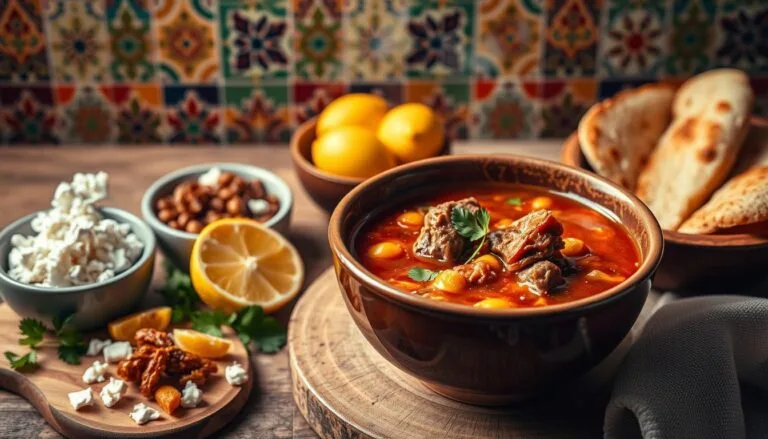
Perfect Accompaniments
Enhance the essence of this dish with these classic pairings:
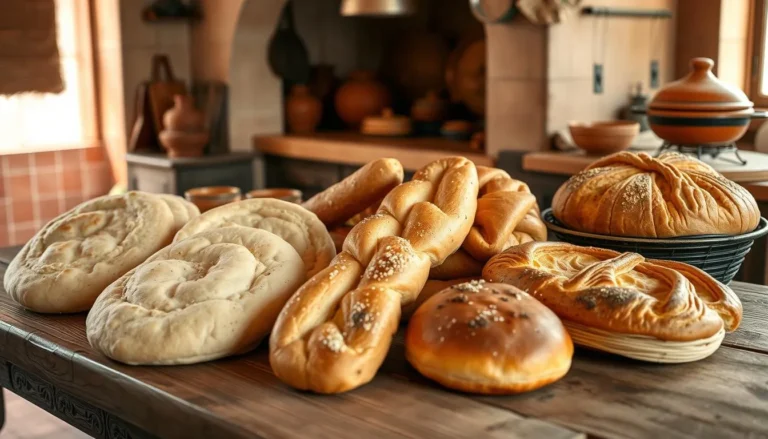
- Crusty bread (like khobz) to soak up every drop of broth.
- Dates—especially Medjool or Deglet Nour varieties—to balance savory flavors.
- Fresh lemon wedges for a bright citrus zing.
- A sprinkle of chopped cilantro for freshness.
- Small plates of olives for salt and depth.
Beverage Suggestions
A light or herbal drink completes the experience:
- Moroccan mint tea: Steep green tea with fresh mint leaves and sugar—this Traditional recipe cools the palate.
- Light red wines: Beaujolais or Côtes de Provence Rosé let the soup’s spices shine.
- Sparklinging water with lemon for a refreshing alternative.
These pairings echo generations of culinary wisdom. Dates and bread remind us of Ramadan feasts. Mint tea whispers of Middle Eastern hospitality. Whether you choose wine or water, each choice tells a story of warmth and togetherness. Let these traditions guide your next bowl of it—your kitchen will feel like North Africa in no time.
Traditional Serving Methods
“A shared bowl of Moroccan soup is a silent promise of belonging.” – A Moroccan proverb
Serving the Moroccan soup is as important as cooking it. Imagine a clay pot simmering on a stove as Ramadan’s sunset falls. It’s more than just ending the fast—it’s a cherished tradition in Middle Eastern cuisine. Let’s explore its significance.
Sifasting and Feasting
In Ramadan, the first sip of Moroccan soup is a communal act of faith and gratitude. Families serve it in wide clay bowls, letting the steam rise. The Traditional recipe includes olive oil and fresh cilantro to honor this meal. Here’s how it’s done:
- Warm the soup just before serving to preserve its vibrant spices.
- Pair with dates—a timeless duo of savory and sweet.
- Offer small lemon wedges to balance the richness.
Family Bonds Over Bowls
At family reunions, it becomes a canvas for shared stories. It’s a meal that goes beyond filling hunger—it’s a way to reconnect. A grandmother might use a brass spoon to serve, while children pass around flatbreads. Here’s what makes it special:
| Occasion | Key Details |
|---|---|
| Ramadan | Served in earthenware, garnished with parsley |
| Holidays | Accompanied by almond milk and honey-soaked pastries |
| Weekends | Lightly topped with croutons for crunch |
Every spoonful carries generations of care. Whether you’re making this Traditional recipe at home or enjoying it at a Middle Eastern cuisine festival, remember: the warmth comes from sharing.
Moroccan soup Around the World
Imagine a bowl of it warming hands in a bustling New York City café or simmering in a Parisian kitchen. This soup’s journey crosses borders. From bustling markets to cozy kitchens, its story is one of adaptation while honoring tradition.
Popular Global Variations
- In Spain, a hint of smoked paprika softens the broth, blending Andalusian flair with Moroccan soup’s earthy base.
- In France, chefs might garnish servings with fresh tarragon or chervil, echoing local herb gardens without masking the soup’s Moroccan soul.
- Across North America, vegetarian versions thrive, swapping lamb for lentils and chickpeas—proof that Traditional recipe foundations adapt while staying true.
Locating Authentic Harira
Seek out eateries where the aroma of sautéed onions and turmeric greets you. Look for menus listing Middle Eastern cuisine with specifics like “Moroccan soup—homemade stock simmered for hours.” Ask servers about spice blends or if they use soaked chickpeas for tenderness.
Check spice markets in cities like Los Angeles or Paris for vendors selling ras el hanout or preserved lemons—ingredients hinting at authenticity.
“The best Harira whispers of home, whether in Marrakeech or Manhattan.”
Try local halal festivals or Moroccan-owned cafés for the most soulful bowls. Share your discoveries with fellow seekers of comfort in every spoonful.
Where to Find Moroccan soup in the U.S.
“The first bite of authentic Moroccan soup felt like coming home.” – A customer in NYC
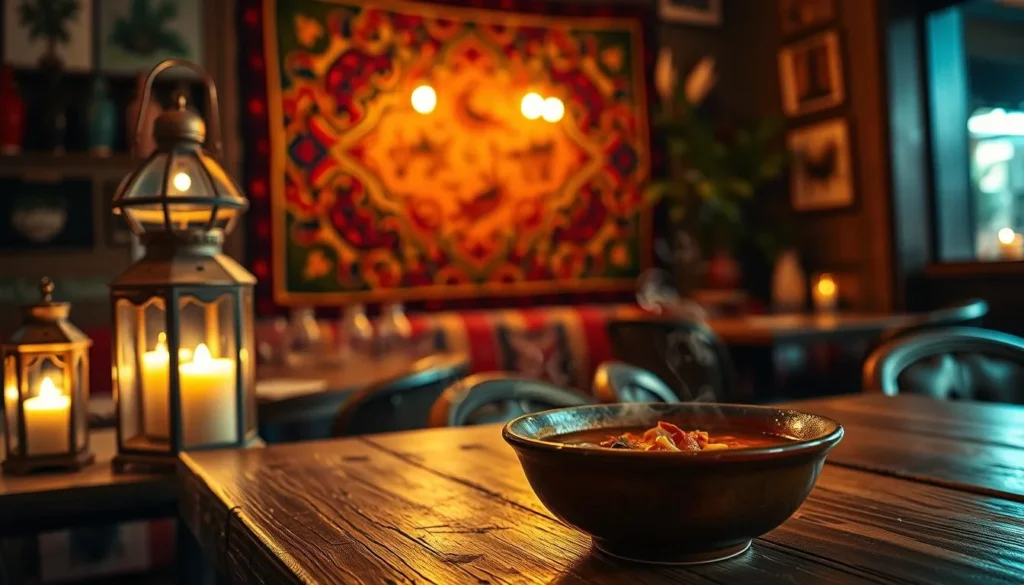
Looking for Moroccan soup near you? I’ve found hidden gems and bustling markets where this Middle Eastern cuisine shines. From big cities to small neighborhoods, I’ve discovered places where tradition and taste come together.
Notable Restaurants
In New York, Casablanca Kitchen offers a smooth Moroccan soup with soft lentils. Chicago’s Marrakech Bistro has saffron-rich broths. And in LA, Safi Restaurant brings family recipes to life. These places use fresh ingredients, just like my grandma’s kitchen.
- Casablanca Kitchen – NYC’s East Village
- Marrakech Bistro – Chicago’s Loop district
- Safi Restaurant – Los Angeles
Farmer’s Markets
At Union Square Greenmarket in NYC or LA Farmers Market, look for vendors like Spice Route or Mediterranean Harvest. They offer simmered broths with spices and tender veggies. Ask about their ingredients—fresh tomatoes and lentils make a big difference.
In smaller towns, check out Middle Eastern groceries. Look for soups in the freezer, but choose ones with whole ingredients. Let your curiosity guide you—each bowl has a story of tradition.
Preserving Harira Traditions
Every spoonful of it tells a story of family and heritage. For generations, the Traditional recipe has connected cultures. It’s like a family heirloom passed down through the years.
Imagine a grandmother teaching her granddaughter how to make the soup. She shows her how to balance the spices just right. This is how traditions live on—through patience and love.
“The secret’s not in the ingredients, but in the telling,” said Laila, a third-generation cook from Marrakech. “We teach by doing, not just by explaining.”
Family Recipes: The Heart of Continuity
Many families keep their Traditional recipe close to their hearts. Some don’t write it down. Instead, they cook together, passing on techniques through practice.
These unwritten lessons are a living history. Groups like the Moroccan Cultural Society are documenting these recipes. They make sure Middle Eastern cuisine traditions live on. Even small actions help, like asking elders to share their secrets or filming their cooking.
Cultural Events Keeping Traditions Alive
At festivals like the Fez Food Festival, big pots of Moroccan soup simmer. Everyone gets to taste the heritage. These events are more than just gatherings—they’re learning experiences.
Chefs show off their spice blends, and elders share how Moroccan soup‘s flavors tell Berber stories. Schools even offer workshops. Students learn to make it with local ingredients, connecting old and new.
Keeping traditions alive isn’t about freezing them in time. It’s about growing them. Whether learning from a relative or attending a cultural fair, we all help keep these stories alive. The next time you stir a pot of it, remember you’re part of a timeless tradition.
Cooking Harira at Home
Start bringing Morocco’s warmth into your kitchen with simple steps. Making this traditional recipe can be fun and easy. Whether you’re new to cooking or have lots of experience, these tips will help you make a delicious lentil soup that everyone will enjoy.
Essential Kitchen Tools
Having the right tools makes a big difference. Here’s what you’ll need:
- Heavy-bottom pot or tagine for even heat distribution
- Sharp knife for chopping vegetables and herbs
- Wooden spoon for stirring without scratching pots
- Measuring cups and spoons for precise ingredients
If you don’t have a tagine, a Dutch oven is a great substitute. It helps to simmer gently without burning.
Storage and Leftover Ideas
Make your Moroccan soup last longer than one meal! Here’s how:
- Refrigerate in an airtight container up to 5 days
- Freeze portions in labeled bags for up to 4 months
- Reheat gently on the stove or in the microwave
Get creative with leftovers! Try:
- Thickening leftovers into a stew base with extra lentils
- Serving over couscous for a hearty meal
- Mixing with fresh herbs for a flavor boost
Small batches can even become quick lunches during busy weeks. Remember, this lentil soup gets better with time—its flavors deepen as it rests.
Every time you cook it, becomes a personal tradition. Adjust spices to your taste, and let it remind you of shared meals around the world. Your kitchen is a space for connection, one pot at a time.
Conclusion: Enjoying Moroccan soup Anytime
As we wrap up our journey with Moroccan soup, let’s think about how this timeless soup goes beyond seasons and diets. It’s perfect as a healthy soup or for those looking for vegetarian options. it’s warmth welcomes you to join in its traditions and make it your own.
Final Thoughts
Moroccan soup‘s roots in Moroccan culture are as deep as its flavors. Yet, it’s adaptable, making it a favorite in kitchens around the world. Its mix of lentils and chickpeas offers a protein-rich meal, packed with antioxidants.
Even without meat, it remains vibrant, showing that tradition and innovation can go hand in hand. Every spoonful tells a story from centuries past. Yet, it’s eager to welcome your unique touch.
Encouraging Culinary Exploration
Get into your kitchen and let Moroccan soup‘s spices lead the way. Whether you’re making a classic recipe or trying a meat-free version, each bowl celebrates your connection to global flavors. Share it with your family—it’s a 200–300 calorie meal that’s perfect for any occasion.
Remember, it is more than just a dish. It’s an invitation to explore how food brings us together across cultures. Your pot is ready. Simmer, season, and enjoy the journey.
FAQ
What is Harira?
Itis a traditional Moroccan soup. It’s known for its rich flavors and cultural importance. This hearty dish combines protein-rich legumes, tomatoes, and aromatic spices. It’s enjoyed during Ramadan but loved all year.
What are the typical ingredients in Moroccan soup?
Harira’s ingredients include lentils, chickpeas, tomatoes, onions, and celery. It also has fresh herbs like cilantro and parsley. The spices like turmeric, ginger, and paprika make it comforting and tasty.
How can I prepare Harira at home?
To make it at home, start by sautéing the aromatics. Then, add legumes and vegetables and simmer until tender. A step-by-step recipe can help, making it easy for anyone to cook.
Are there vegetarian options for Harira?
Yes! Vegetarian Moroccan soup keeps its flavor by using more legumes and vegetables. It’s made with vegetable broth. This way, it’s a delicious, plant-based dish that stays true to the traditional recipe.
What are the health benefits of Harira?
it is not just tasty but also healthy. It’s packed with protein, fiber, and vitamins from its ingredients. The spices also offer health benefits, making it a great choice for your diet.
What are the best pairings to serve with Harira?
Serve it with warm crusty bread and dates for a great flavor contrast. A squeeze of lemon and fresh olives can also enhance the meal. Moroccan mint tea is a perfect drink to enjoy with it.
How is it traditionally served during Ramadan?
During Ramadan, it is the first meal after sunset. Families come together to enjoy this nourishing soup. It’s a time of celebration and community after fasting.
Where can I find authentic Moroccan soup in the U.S.?
You can find authentic Moroccan soup at Moroccan restaurants in the U.S. It’s also available at farmer’s markets or specialty food shops that sell Moroccan or Middle Eastern cuisine. Look for places that focus on traditional preparation.
How can I preserve Moroccan soup traditions?
To keep Harira traditions alive, share family recipes and participate in cultural events. Sharing it at gatherings helps preserve this culinary heritage.
What kitchen tools do I need to cook it at home?
You’ll need a heavy-bottomed pot, a sharp knife, and measuring cups. These tools help you make an authentic Moroccan soup and make cooking easier.
Can I store leftovers of Harira?
Yes! You can store Moroccan soup in the fridge for up to four days or freeze it for three months. Reheating it can make the flavors even better. You can also use it as a topping for grains or add fresh vegetables.


![an image of [pineapple with tajin drawing] dish presented in a table](https://www.passionofcooking.com/wp-content/uploads/2026/01/pineapple-with-tajin-drawing-dish-768x576.webp "How to Create a Perfect Pineapple with Tajin Drawing 7")