
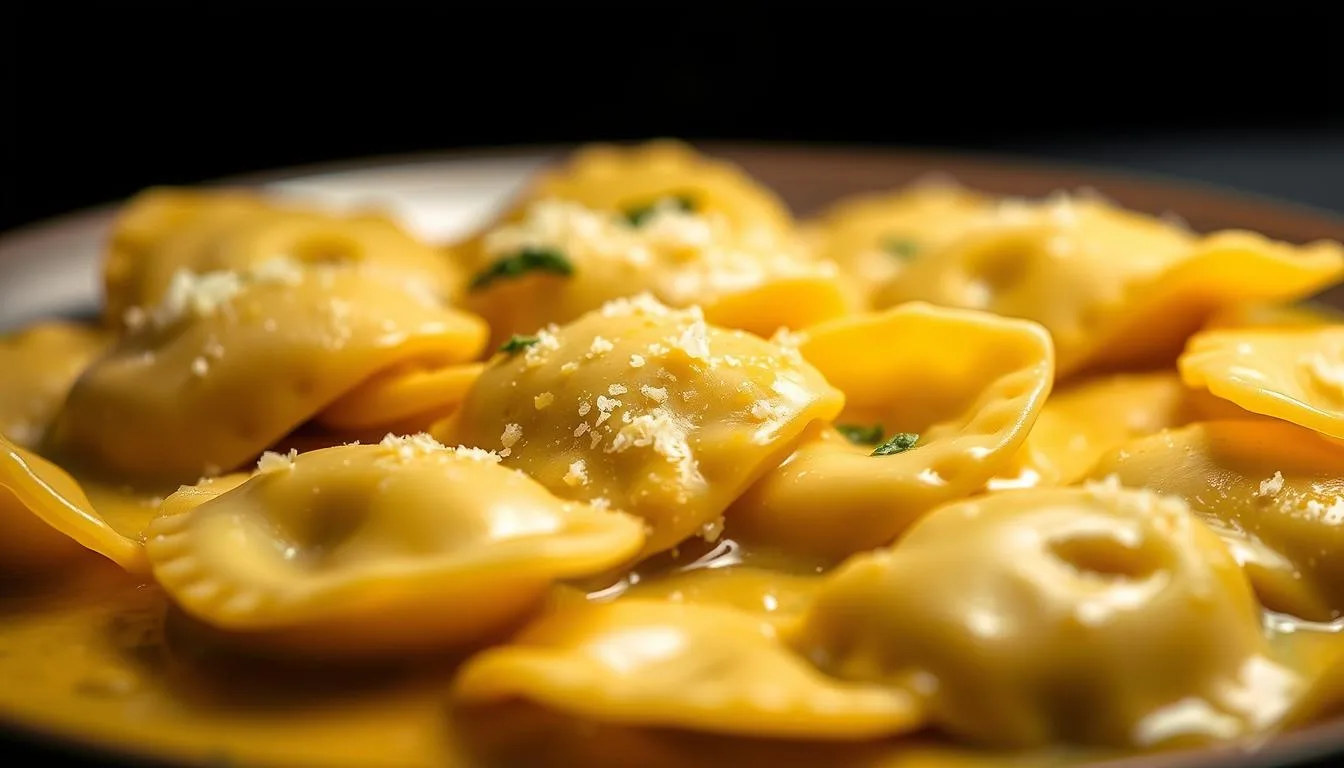
Ravioli with Sage Butter Sauce: A Flavorful Dish
There’s something magical about a dish that makes a quiet Tuesday feel like a celebration. Ravioli with Sage Butter Sauce is that dish. Imagine golden ravioli in a velvety sauce, with each bite whispering buttery sage and a hint of lemon.
FAQ
Can I Freeze Ravioli?
Yes, you can freeze both homemade and cooked ravioli. For the best results, freeze uncooked ravioli by flash freezing them on a baking sheet before transferring to an airtight container. Cooked ravioli should be cooled quickly and stored in a separate container from the sauce to maintain texture.
How Long Does the Sage Butter Sauce Last?
The sage butter sauce can be stored in the refrigerator for up to 3 days. If you plan to make it ahead of time, store it properly in an airtight container. To reheat, do so gently to avoid separation. Freezing the sauce is not recommended, as it may alter the texture.
What Alternatives Can I Use Instead of Sage?
If you don’t have sage on hand, you can try using thyme or rosemary for a different yet complementary flavor. However, keep in mind that each herb has its unique taste profile.
Can I Use Vegan Butter for the Sauce?
Absolutely! Vegan butter works beautifully in the sage butter sauce, allowing those avoiding animal products to enjoy a similar flavor. Just be cautious of the melting point, as some vegan butters vary in texture.
What Should I Do if My Sauce Separates?
If your sauce separates, try gently whisking in a bit of water or broth over low heat until it comes back together. Adding a small amount of butter can also help emulsify it again.
What Types of Fillings Would You Recommend for Ravioli?
Classic fillings like ricotta and spinach, butternut squash, or wild mushrooms pair wonderfully with sage butter sauce. Feel free to experiment with other fillings that complement the earthy flavors of sage.
How Can I Make the Dish More Nutritionally Balanced?
You can incorporate whole wheat pasta options for added fiber and protein, and consider using vegetable-rich fillings such as spinach or peas. This way, you can enjoy indulgence while still being mindful of nutrition.
What is the Best Way to Reheat Cooked Ravioli?
The best way to reheat cooked ravioli is on the stovetop with a splash of water or broth to avoid drying out. You can also microwave them, but cover them with a damp paper towel to retain moisture.
Can I Make the Sage Butter Sauce Ahead of Time?
Yes, you can make the sage butter sauce ahead of time. Just remember to reheat it gently and check the consistency, adding a little water or broth if needed to restore its creamy texture.
Ravioli with Sage Butter Sauce
Homemade ravioli offers a warmth that boxed packages can’t.
What is Ravioli?
Ravioli are little pockets of happiness. They’re made from dough filled with cheese, spinach, or pumpkin and blue cheese. Homemade ravioli is worth the effort because of its soft, stretchy texture. Even a simple cheese filling becomes special with the right sauce.
The Origins of Sage Butter Sauce
Sage butter sauce, or burro e salvia, comes from northern Italy. It’s made with browned butter and sage leaves. This mix is like culinary magic—it’s simple yet deeply satisfying. Some chefs prefer unsalted butter for better control over salt, but the goal is always to fill the kitchen with aroma.
A Match Made in Culinary Heaven
Picture this: fresh pasta with sage butter wrapped around ravioli, each bite a perfect mix of rich and light. The sauce’s warmth complements the pasta without overwhelming it.
Ingredients for a Ravioli with Sage Butter Sauce
Fresh vs. Store-Bought Ravioli
Homemade ravioli has a rustic charm, like my Nonna’s pasta pockets. They’re filled with spinach and ricotta. They cook in 20 minutes, ideal for a cozy night.
But store-bought ravioli is also great. Look for brands like DeLavio or Barilla for quality. Always check cooking times and boil until al dente.
Essential Ingredients for Sage Butter Sauce Recipe
The sauce’s base is golden butter, fresh sage, and salt. Use unsalted butter for better flavor control. Fresh sage’s aroma is unmatched by dried herbs.
Buy it at your local farmers’ market for the best taste. A squeeze of lemon or a dash of nutmeg adds depth without overpowering.
Optional Add-Ins to Elevate the Dish
- Lemon zest brightens the sauce’s richness.
- Toasted pine nuts or walnuts add crunch.
- Grated Parmesan at the end boosts umami.
- A minced garlic clove sizzledd in butter adds depth.
Vegans can use coconut oil and nutritional yeast instead of butter and Parmesan.
Step-by-Step Guide to Cooking Ravioli with Sage Butter Sauce
Let’s make this easy dinner recipe come to life. The Ravioli with Sage Butter Sauce is easier than you think. Just follow these steps.
Preparing the Ravioli
First, fill a big pot with at least 4 quarts of water. Heat it up until it boils and add 1 tbsp salt. Like the sea itself.
Then, gently add your ravioli, 6 at a time, and stir softly. Cook for 1–2 minutes until they start to float. Check the edges to avoid overcooking. Drain them, but keep a little pasta water for later.
Making the Sage Butter Sauce
In a skillet, melt 100g butter over medium-low heat. Add 12 sage leaves and let them shimmer for 3 minutes. Stir gently so they crisp but don’t burn. The kitchen will fill with autumn magic.
Take it off the heat before the butter browns too much.
Combining the Two for Optimal Flavor
- Put the cooked ravioli into the sauce and toss gently. Imagine dancing with delicate leaves, not wrestling them.
- If the sauce is too thick, add a bit of pasta water. Sprinkle with extra sage or Parmesan if you like.
- Serve warm, with a sprinkle of chili flakes or a lemon wedge for brightness.
Now, sit down and enjoy your homemade Ravioli with Sage Butter Sauce.
Tips for Perfecting Your Dish
Let’s explore the small details that make an Italian pasta dish truly special:
Cooking Tips for Fluffy Ravioli
- Start by boiling water vigorously—like a lively dance—before adding pasta. Add a generous pinch of rock salt to boost flavor.
- When adding ravioli, stir gently to prevent sticking. Cook fresh ravioli for 2–3 minutes until they float. For store-bought, cook for 4 minutes.
- Check if ravioli are done by biting into one. They should be tender but not mushy. Avoid overcooking to prevent soggy homemade ravioli.
Balancing Flavors in Sage Butter Sauce
Melt butter over medium-low heat until it turns golden, which takes about 4 minutes. Keep an eye out for that nutty aroma!
- Add sage leaves when the butter reaches amber. Cook until crisp, then remove with a slotted spoon to garnish later.
- Season the sauce with salt, pepper, and a pinch of red pepper flakes. Taste as you go to ensure harmony with your pasta’s filling.
- Stop cooking the sauce when it lightly coats a spoon. Overcooking can make it bitter.
Each try brings you closer to mastering this Italian pasta dish.
Popular Variations of Ravioli with Sage Butter Sauce
Get creative with this fresh pasta with sage butter classic. Small changes can turn it into a
Fillings That Speak to the Season
Try new fillings for a twist. Use butternut squash or roasted pumpkin for fall. Spring herbs like parsley and chives are great for spring.
For a hearty choice, add sautéed mushrooms or sun-dried tomatoes. My top pick is spinach and ricotta. It pairs well with sage’s sharpness.
Plant-Based Magic
Plant-based lovers, don’t miss out! Use vegan ravioli with roasted egg plant or red peppers. Mix coconut oil with nutritional yeast for a buttery sauce. Top with toasted pine nuts for crunch.
Herb-Infused Twists
- Add minced garlic or thyme to the butter sauce for extra depth
- Top with grated vegan Parmesan or nutritional yeast
Pairing Recommendations
Let’s find ways to mix flavors and presentation for a memorable Italian pasta dish.
Side Dishes That Work Well with Ravioli
Try a peppery arugula salad with lemon vinaigrette or roasted veggies. Crusty sourdough bread is perfect for dipping in extra sauce. For more ideas, check out what-to serve with ravioli for global pairing inspirations.
Garnishes for Added Flair
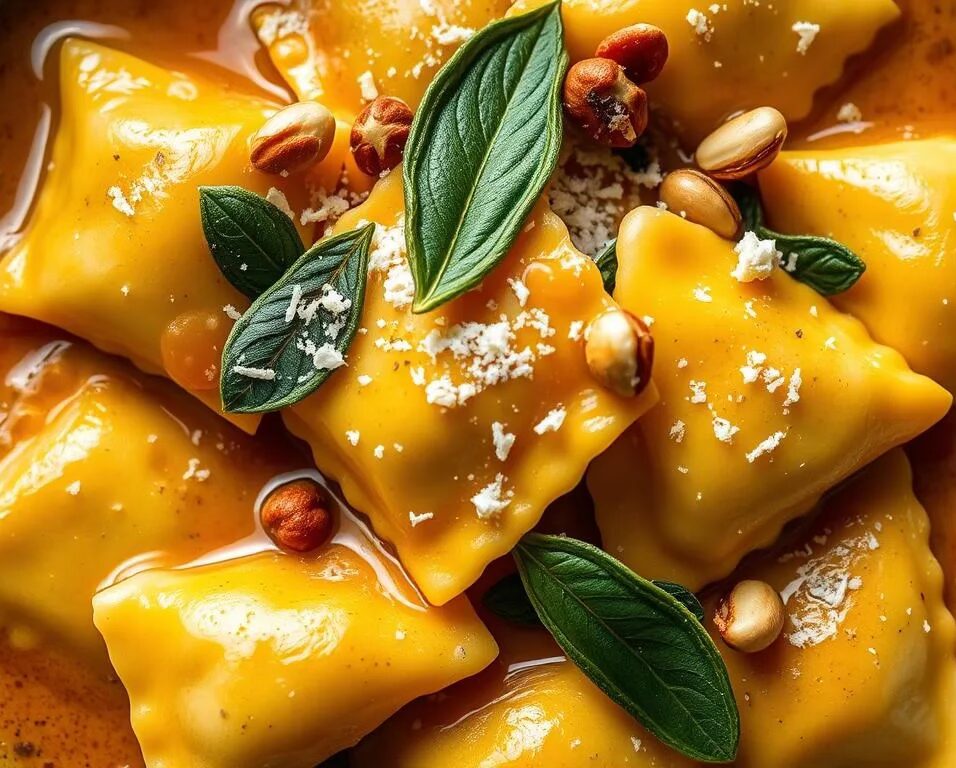
Finish your dish like a pro. Start by spooning warm butter sauce onto the plate. Sprinkle Pecorino over it, then place ravioli on top. Drizzle with extra browned butter and scatter fried sage leaves, lemon zest, and crushed pistachios.
A final sprinkle of Parmigiano and a dash of pepper complete the look. This way, every bite has both texture and flavor.
The Nutritional Benefits of Ravioli
Protein and Carbohydrate Content
Each serving has 26g of protein from cheese or meat. It also has 16g of carbs from pasta. For a healthier option, choose whole wheat ravioli or add steamed veggies like roasted butternut squash. Here’s the full profile:
| Nutrient | Amount per Serving |
|---|---|
| Calories | 365 |
| Protein | 26g (20% Daily Value) |
| Carbs | 16g (6% Daily Value) |
| Fiber | 5g (19% Daily Value) |
| Potassium | 636mg (14% Daily Value) |
The Health Benefits of Sage
“Sage’s antioxidants support digestion and may boost brain health.”
Our sage butter sauce recipe uses sage for flavor and nutrition. Sage is rich in vitamins A and K. Its rosmarinic acid helps with digestion, great after rich meals. Pair it with seasonal greens like spinach to boost vitamin absorption.
- Use lean turkey in fillings to lower saturated fat
- Top with roasted squash for fiber-rich texture
- Add a side salad for extra vitamin C
Storing Leftovers
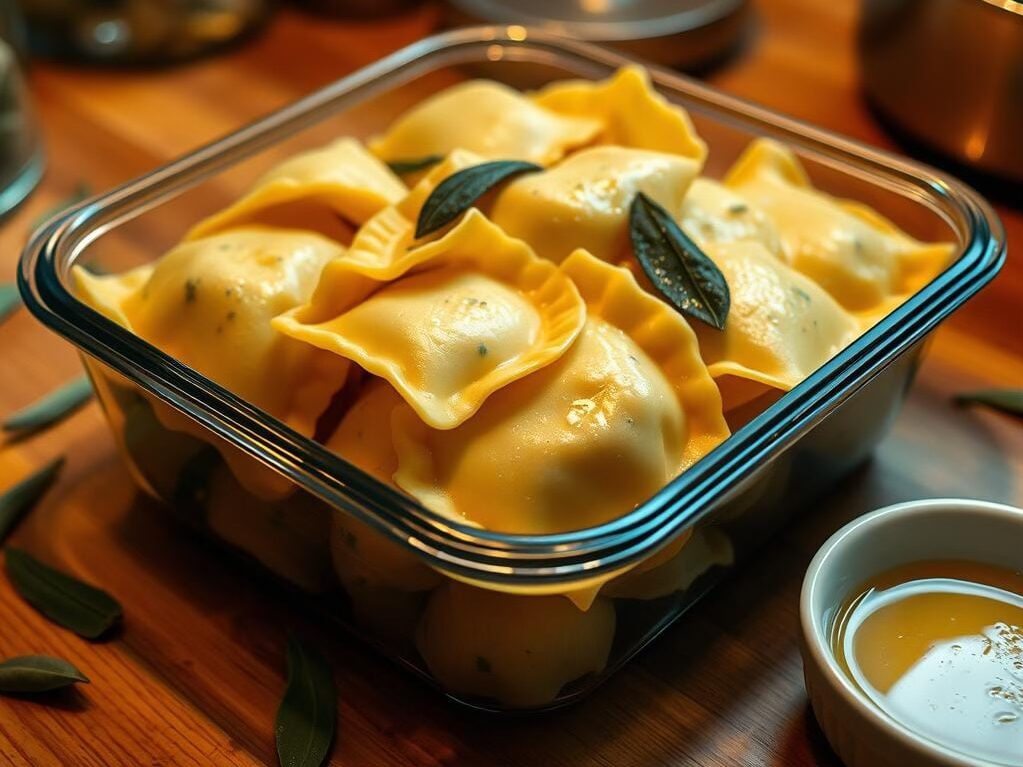
Let’s talk about keeping your fresh Ravioli with Sage Butter Sauce tasting amazing even when leftovers are on the menu. Start by letting your dish cool completely before storing. Divide the ravioli and sauce into airtight containers. Keep the sauce separate to avoid sogginess.
For the fresh Ravioli with Sage Butter Sauce, refrigerate for 2–3 days or freeze for up to 2 months. When freezing, layer ravioli between parchment paper to prevent sticking.
When reheating time comes, choose your method wisely. For the microwave, defrost slightly first. Heat in 30-second bursts, stirring gently, and add a splash of pasta water to revive moisture. On the stovetop, warm the ravioli and sauce together over low heat—add a pat of butter to enrich the flavor. Need extra richness? Toss with a fresh sage leaf while reheating.
- Refrigerate leftovers within 2 hours of cooking.
- Freeze in labeled containers for up to 2 months.
- Reheat no more than 3 times to keep texture intact.
Transform leftovers into an easy dinner recipe by pairing reheated ravioli with a crisp green salad or toasted bread. For inspiration, explore passion for cooking for variations like adding sautéed spinach or pumpkin seeds. Remember, a sprinkle of fresh sage before serving brings back that signature aroma.
Conclusion: Why You Should Try This Dish
Homemade ravioli is a magical Italian pasta dish. Let’s see why it’s a must-have in your kitchen.
A Dish for Every Occasion
- For holidays—think golden ravioli glistening with sage butter, perfect for Thanksgiving or winter gatherings.
- Weeknights become special with its 2-hour prep time, turning simple ingredients into comfort food.
- Romantic dinners shine with heart-shaped ravioli, using beet or spinach puree for color.
Final Thoughts on Ravioli with Sage Butter Sauce
My first bite of homemade ravioli felt like a hug from my Nonna’s kitchen. Sage’s earthy warmth paired with tender pasta is a lesson in simplicity. It shows that great food needs no frills.
With roots in Piedmont’s agnolotti and Emilia-Romagna’s tortellini, this recipe honors centuries of culinary storytelling. Serve it with a crisp Chardonnay or a drizzle of balsamic glaze.
![an image of [casual dinner recipes] dish presented in a table](https://www.passionofcooking.com/wp-content/uploads/2026/01/casual-dinner-recipes-dish-768x576.webp "Easy Casual Dinner Recipes 2")