The Authentic Italian Pasta Puttanesca
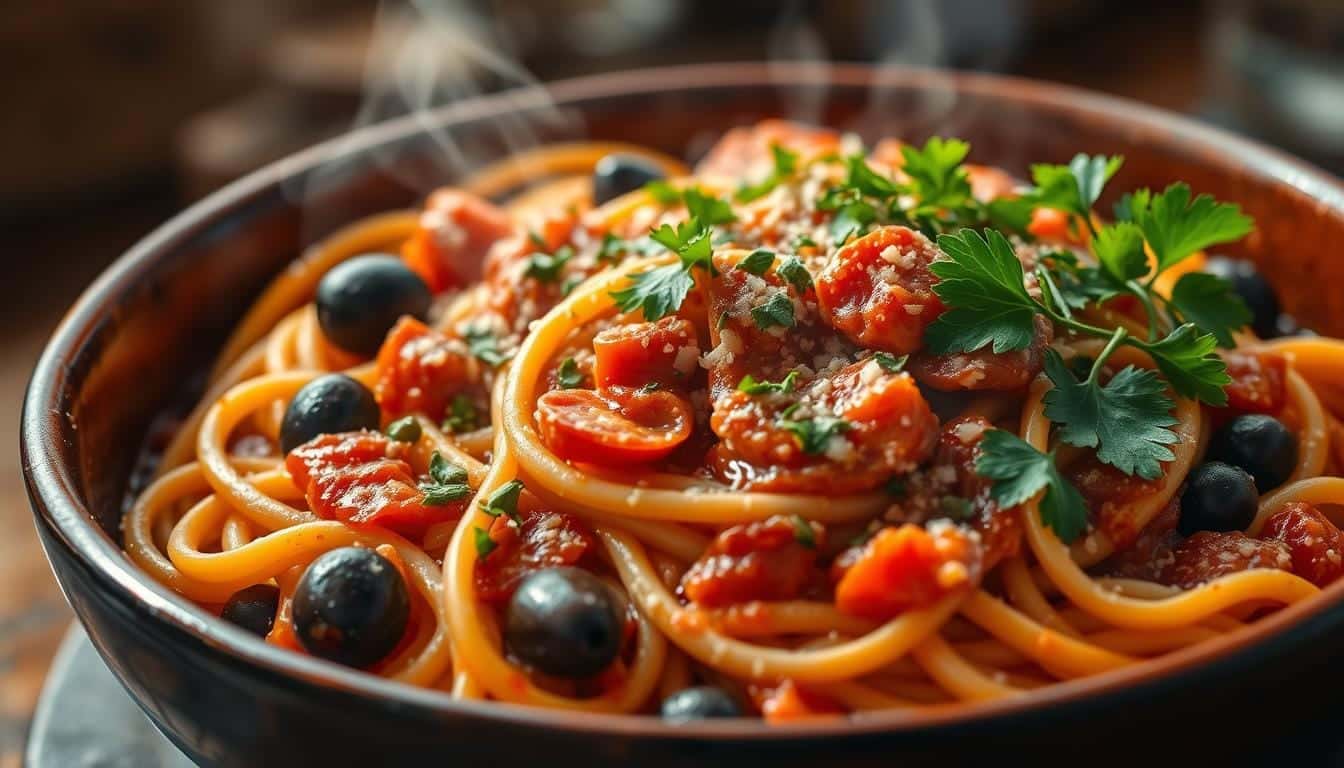
There’s something comforting about a dish that wraps you in warmth when you smell it. For me, that’s Pasta Puttanesca. It reminds me of sun-drenched Italian coastlines and bustling trattorias. Each bite is a mix of bold flavors: black olives, capers, and anchovy fillets.
I’ve found solace in this dish many times. Its red sauce bubbles with garlic and red pepper flakes. The pasta still clings to every drop of that vibrant sauce.
What is Pasta Puttanesca?
Imagine a dish made from scraps and spices. it is a bold Italian pasta recipe from Traditional Italian cuisine. It began in Naples, where women made a dish from what they had. The name, “alla puttanesca,” means prostitute’s style, but the taste is magical.
The Origins of Pasta Puttanesca
It’s said that Neapolitan women created this dish for quick meals. They mixed tomatoes, anchovies, capers, and olives. Now, it’s a beloved dish in Traditional Italian cuisine.
The Ingredients That Make It Unique
So, what makes this dish special? Let’s look:
- Anchovies: Add umami depth—start with 4 fillets for a balanced start
- Black olives: Pitted and briny, they add texture
- Capers: Tiny but mighty—¼ cup adds tangy brightness
- Garlic and red pepper flakes: Warmth and aroma
| Ingredient | Quantity | Role |
|---|---|---|
| Anchovies | 4–8 fillets | Umami base |
| San Marzano tomatoes | 1 can (28 oz) | Rich tomato base |
| Black olives | ½ cup | Saltiness and texture |
| Capers | ¼ cup | Briny contrast |
Traditional vs. Modern Recipes
Exploring Authentic pasta puttanesca recipe shows how tradition meets innovation. Let’s see how this Traditional Italian cuisine evolves while keeping its essence.
Classic Italian Preparations
The dish’s heart is in its simplicity. My grandmother’s Italian pasta recipes taught me that quality ingredients are key. A classic version uses:
- Peeled tomatoes crushed by hand for texture
- Capers rinsed to remove brininess
- Olives and anchovies as umami anchors
It’s simmered for just 5 minutes to keep flavors bright. This method respects Traditional Italian cuisine’s hands-on approach.
Innovations in Puttanesca
Chefs today play with this foundation while honoring its roots.
- Add white wine during sautéing garlic
- Swap anchovies for capers plus nutritional yeast for vegan versions
- Experiment with pasta shapes like fusilli to better cling to sauce
| Traditional | Modern |
|---|---|
| Hand-crushed tomatoes | Blended purées for silkiness |
| 160g spaghetti | Spelt or chickpea pasta |
| No added herbs | Basil chiffonade or chili oil drizzle |
Key Ingredients in Pasta Puttanesca
Every bite of authentic pasta puttanesca recipe is special. It’s all about the ingredients that remind us of the Mediterranean. Let’s explore the stars of this bold dish.
Olives: A Pivotal Element
Kalamata olives are my top pick for this recipe. Their salty taste is key to the Puttanesca sauce. Even after cooking, they keep their meaty texture, adding depth.
Using pre-pitted olives saves time. Remember, chop them coarsely to let their flavor stand out.
Capers: The Flavor Enhancer
Capers are tiny but mighty. Make sure to drain them well to avoid too much salt. They’re the perfect finishing touch for pasta with olives and capers. Use 2 tablespoons, rinsed, for the right balance.
Anchovies: Their Role in the Dish
Anchovies might sound strange, but trust me, they’re essential. Three fillets add a rich umami flavor without tasting fishy. Like garlic, they’re a crucial but subtle ingredient. No need to substitute.
Health Benefits of Pasta Puttanesca
Pasta Puttanesca is more than a tasty dish—it’s good for you. It’s filled with ingredients that are both delicious and healthy. Let’s explore why it’s a great choice.
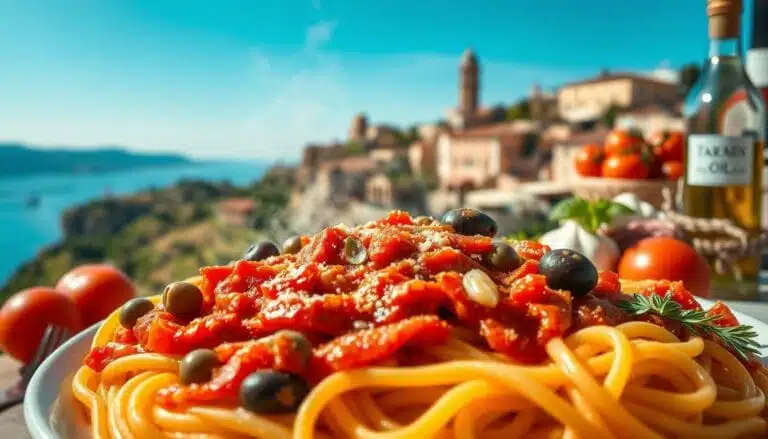
This dish is a mix of flavor and nutrition. It has 12 grams of protein and healthy fats from olive oil and anchovies. Did you know? Research shows that tomatoes, garlic, and olives in Pasta Puttanesca have antioxidants. These fight inflammation.
- Olives and olive oil support heart health with monounsaturated fats
- Tomatoes increase lycopene, a nutrient that’s better when cooked
- Capers and garlic add antioxidants
| Nutrient | Per Serving |
|---|---|
| Calories | 386 |
| Protein | 12g |
| Fiber | 6g |
| Monounsaturated Fats | 6g |
| Sodium | 542mg (adjustable to taste) |
We love food that’s good for our bodies. If you’re watching sodium, try rinsing capers or using low-sodium anchovies. This easy pasta dish stays true to its Italian roots while fitting your health goals.
Cooking Techniques for Perfect Puttanesca
Every bite of Puttanesca sauce should be a symphony of flavors. Start by lightly toasting your pans. This step enhances the garlic’s flavor without burning it. Patience is key here.
According to Chef Elena Rossi, a Naples-trained culinary expert, here’s how to perfect the blend:
- Simmer the ingredients uncovered for 10–15 minutes. This process softens the acidity and blends the flavors.
- Add pasta water slowly. It’s your secret to a creamy, clingy sauce.
- Mix the pasta and sauce for 2 minutes. The pasta’s residual heat cooks it while blending the flavors.
A Quick weeknight dinner recipe relies on quick prep tips. Keep these essentials ready:
| Ingredient | Prep Tip |
|---|---|
| Olives | Rinse pitted olives to remove excess salt |
| Capers | Soak in warm water 5 minutes to soften |
| Tomatoes | Crush by hand for rustic texture |
Timing is crucial in the kitchen. Follow this rhythm:
| Step | Time | Goal |
|---|---|---|
| Sauté aromatics | 5 mins | Soft, translucent onions |
| Sauce simmer | 15 mins | Flavor development |
| Pasta cook | 10 mins | Al dente texture |
When combining, remember to stir gently and trust your senses. A Easy pasta dishes masterpiece is created when ingredients are allowed to meld together. Save pasta water—it’s your sauce’s best ally.
Vegetarian and Vegan Alternatives
Don’t worry if you’re vegetarian or vegan; you can still enjoy pasta puttanesca. This dish is flexible and comforting, perfect for Italian pasta recipes that fit your diet. We’ll find ways to keep the dish’s briny flavor without animal products.
Vegetarians, skip the anchovies and add more capers and olives for umami. Soy sauce or nutritional yeast can also enhance the flavor. Here’s how to make it:
- Swap anchovies with 1 tsp miso paste or 1 Tbsp caper brine.
- Add ½ cup cooked cannellini beans for richness—my favorite Easy pasta dishes hack!
- Use a plant-based broth when simmering the sauce.
Vegans, try this Quick weeknight dinner recipe:
- Replace anchovies with 1 tsp dried kombu (sea vegetable) soaked in warm water for 10 minutes.
- Stir in 1 Tbsp tomato paste to amplify depth.
- Pair with a side of sautéed spinach for added texture.
Pro tip: Save pasta water when cooking gluten-free pasta—it helps the sauce stick. Leftovers last 3 days in the fridge or freeze for later.
Tips for Serving Pasta Puttanesca
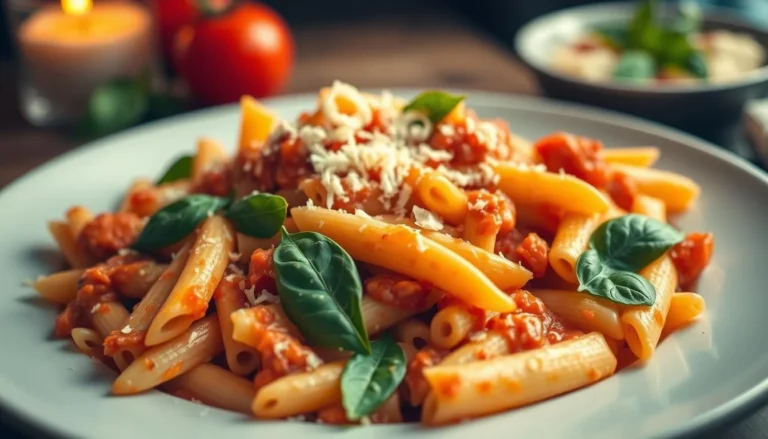
Setting the table warmly speaks volumes. When serving Pasta Puttanesca, use shallow bowls. This lets the sauce pool around the pasta, making each bite special. A sprinkle of Pecorino Romano or a basil chiffonade can make it unforgettable.
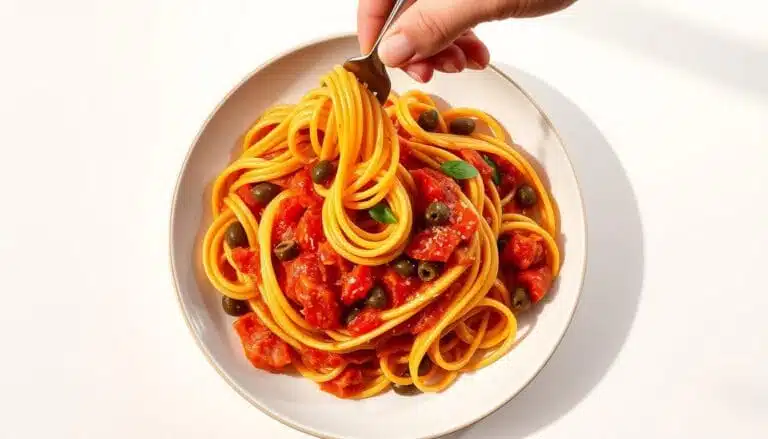
For Authentic pasta puttanesca recipe moments, place pasta in the center of plates like a cozy nest. Use tongs to coil strands of casarecce or penne, letting sauce cling to every curve. A dusting of chili flakes adds a fiery contrast. Keep it simple yet intentional—this dish thrives on balance.
Presentation as Love
Warm the plates first. A cold plate drains heat from the pasta, dulling its vibrancy. Drizzle a drop of olive oil over the dish before serving—a final embrace of flavor. Garnish with a twist of lemon zest or a few torn basil leaves for freshness.
Accompaniments That Complement
- Easy pasta dishes shine with a side of crusty bread—try brushing garlic bread with olive oil and rosemary.
- A crisp green salad with lemon and chili vinaigrette cuts through the richness.
- Offer small bowls of grated cheese and chili flakes so everyone can personalize their portion.
Remember: the table is where stories begin. Let the meal breathe—serve it family-style, sharing the Pasta Puttanesca family-style encourages conversation. Leftovers? Reheat them with a splash of pasta water to restore that first-serve silkiness.
Where to Find the Best Pasta Puttanesca in the U.S.
Enjoying Pasta Puttanesca can be a special experience. You might find it at a cozy trattoria or make it at home. For a true taste of Italy, look for Italian-American spots or restaurants that focus on bold flavors.
In cities like New York or Chicago, family-owned places often make it with love. They use key ingredients like olives, capers, and anchovies. These are what make the dish special.
Notable Italian Restaurants
Choose places where chefs value simplicity. They make the sauce with basic ingredients. Look for restaurants that use fresh garlic, ripe tomatoes, and salty capers.
Many chefs aim for the right balance of flavors. They keep the dish true to its Italian roots.
Popular Food Festivals Featuring Puttanesca
Food festivals like the Feast of San Gennaro in NYC are great places to try it. Events in Little Italy across the country also feature it. These events let you see how local chefs put their own twist on Puttanesca.
Making it at home is easy. Just boil pasta, sauté onions, and mix the sauce. It’s ready in 10–15 minutes. You can also freeze the sauce for later. For more ideas, check out Italian pasta recipes that blend tradition and creativity.
FAQ
What is Pasta Puttanesca?
Pasta Puttanesca is a classic Italian dish. It mixes strong tastes like anchovies, olives, capers, garlic, and tomatoes. This creates a tasty, slightly spicy sauce that’s both comforting and satisfying.
What are the key ingredients in Puttanesca sauce?
What makes Puttanesca sauce special are anchovies, briny olives, tangy capers, aromatic garlic, and fresh tomatoes. Together, they form a flavorful mix.
How did Pasta Puttanesca originate?
Pasta Puttanesca comes from Naples, Italy. Its name means “in the style of a prostitute.” It was made by women using pantry items quickly, showing its humble start.
What is the traditional preparation method for Pasta Puttanesca?
Making Pasta Puttanesca the old way is simple. It involves crushing tomatoes by hand and using good olive oil. This brings out true Italian flavors.
What are some modern adaptations of Pasta Puttanesca?
Today, Pasta Puttanesca gets a twist. Some add white wine for depth, fresh herbs for brightness, or red pepper flakes for heat. These changes still keep the dish’s essence.
Can I make Pasta Puttanesca without anchovies?
Yes! You can make a vegetarian version by leaving out the anchovies. Use more olives and capers, and add olive oil for depth.
What are some tips for presenting Pasta Puttanesca?
Serve Pasta Puttanesca in warmed shallow bowls. Twirl long pasta shapes to make a pretty nest. Add fresh herbs and serve with warm bread for a complete meal.
Where can I find the best Pasta Puttanesca in the U.S.?
Try Pasta Puttanesca at Babbo in New York City or Bestia in Los Angeles. The Feast of San Gennaro is also a great place to find authentic versions.
What are the health benefits of Pasta Puttanesca?
Pasta Puttanesca is packed with healthy Mediterranean ingredients. It has heart-healthy fats from olives, antioxidants from tomatoes, and immune-boosting garlic. Anchovies add omega-3s, making it a nutritious choice.