Sweet & Nutty Moroccan Couscous Recipe
There’s a special warmth in dishes passed down through generations. Like the first time I tasted Moroccan Couscous recipe at a friend’s family table. The steam from a clay pot and the scent of cumin and cinnamon in the air taught me food’s power to connect us.
Now, I’m sharing that magic with you in this Sweet and Nutty Moroccan Couscous recipe. It blends old traditions with flavors that feel like a warm hug in every bite.
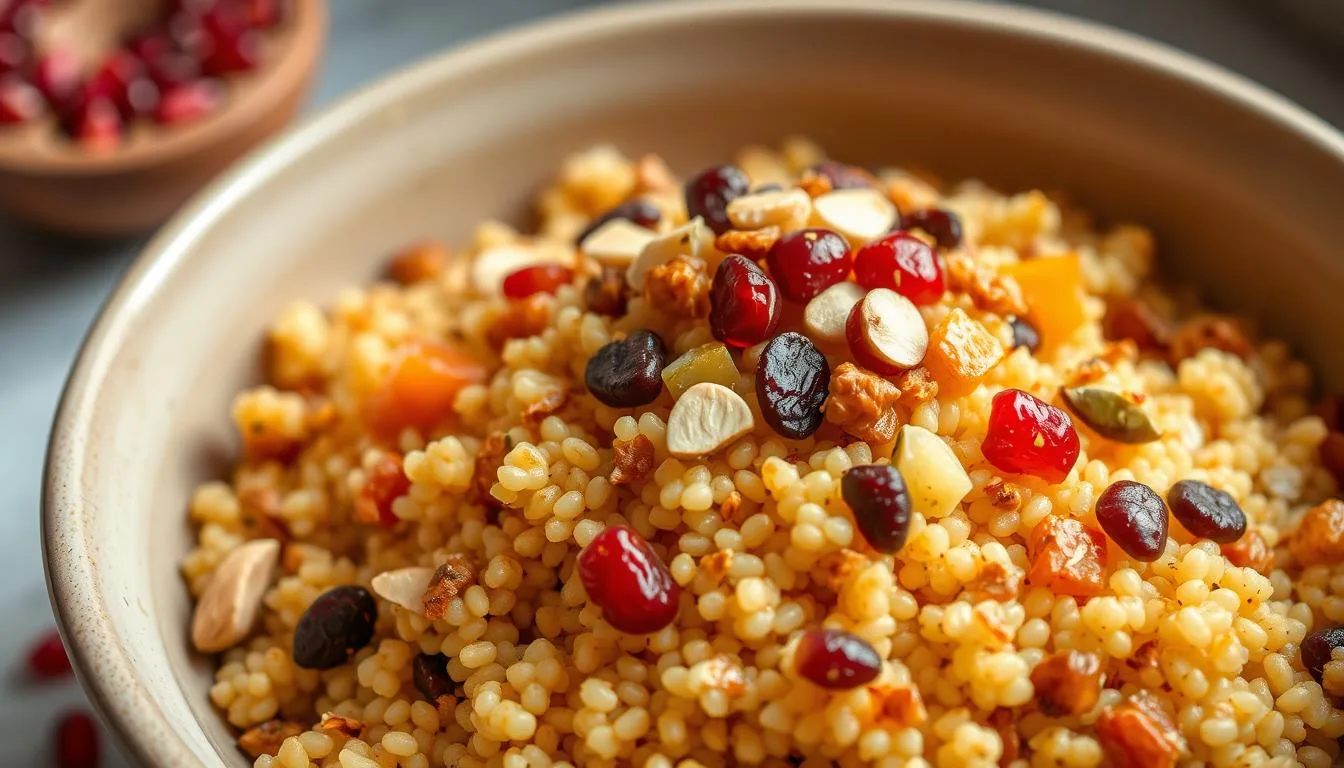
Imagine couscous grains as light as clouds, touched by honeyed apricots and toasted almonds.
What is Moroccan Couscous?
When I first learned about Moroccan Couscous, I was surprised. It’s not a grain, but a tiny pasta made from semolina and water.
Brief History of Couscous
Couscous has its roots in the 7th century with the Berber people of North Africa. Traditionally, it was steamed in a couscoussier for hours. Today, modern kitchens make it quicker while keeping its heritage alive. The word couscous comes from Berber seksu , meaning “well-rolled.”
Key Ingredients in Moroccan Cuisine
| Ingredient | Role |
|---|---|
| Semolina | Base of the couscous grains |
| Cinnamon | Warm, sweet undertone |
| Golden raisins | Sweetness and chewy texture |
| Almonds | Crispy crunch and nutty depth |
| Cumin | Earthy aroma balancing sweetness |
We love how these elements blend into the Moroccan Couscous recipe. Even with its ancient roots, it’s an Easy Moroccan Couscous dish to make at home.
Why Choose Sweet and Nutty Variations?
Since I first tried Sweet Couscous, I’ve loved its mix of flavors. The taste of toasted almonds and dried apricots together is amazing. It’s not just tasty; it’s also healthy, making meals feel extra special.
Flavor Profile Explored
Nutty Couscous is a mix of sweet and savory. The sweet parts, like raisins or figs, balance the spices. Here’s why it’s so memorable:
- Sweetness: Dried fruits like dates or apricots add natural sugar without refined additives.
- Texture: Toasted pine nuts or almonds give a satisfying crunch against the fluffy couscous grains.
- Spice harmony: A pinch of cinnamon or cardamom ties the flavors together gently.
Health Benefits of Nuts and Dried Fruits
Nutty Couscous is not only comforting but also healthy. Here’s how it benefits your diet:
| Ingredient | Nutritional Boost |
|---|---|
| Nuts (almonds, pine nuts) | Healthy fats, protein, fiber |
| Dried fruits (apricots, dates) | Vitamins, antioxidants, natural sweetness |
Every serving has 6g protein and 3g fiber. It makes every bite a healthy treat.
Essential Ingredients for This Recipe
Let’s break down what makes this Couscous with almonds and apricots shine.
Types of Couscous to Use
- Traditional Moroccan couscous (smallest grains) for light, fluffy texture.
- Israeli couscous (pearl style) for a chewy bite—adjust cooking time by 5 minutes.
Recommended Nuts and Dried Fruits
Our go-to combo: toasted almonds for crunch and golden raisins paired with diced apricots. For a Healthy Couscous recipe, we skip added sugars—let the fruits shine naturally.
Spices That Enhance Flavor
Warm spices create depth: cumin for earthiness, cinnamon for sweetness, and a pinch of turmeric for color. We use 1 tsp each of cumin and paprika, plus ½ tsp cinnamon. A dash of saffron adds luxury without overwhelming the dish.
Protein comes from chickpeas (1 can drained) and optional onions or scallions. Always use 1½ cups broth to cook couscous—this simple swap boosts flavor beyond plain water. Rest the couscous 5 minutes post-cook for best texture.
Step-by-Step Instructions
Let’s make this Easy Moroccan Couscous step by step. Each step is crafted to add layers of comfort, just like at home.
Cooking the Couscous
- Warm 1 cup broth in a pot with turmeric, cinnamon, and salt. Bring to a boil, then pour over 1 cup couscous in a bowl. Cover tightly with foil and let sit undisturbed for 10-15 minutes. The grains absorb flavor best this way.
- Fluff with a fork after resting. Avoid stirring too much—it keeps the grains light!
Preparing the Sweet & Nutty Mixture
- Toast almonds in a dry skillet until fragrant (2-3 mins). No oil needed!).
- Caramelize onions slowly over medium-low heat, adding sugar or honey if desired. Patience here deepens the sweet notes.
- Simmer dried fruits like raisins and apricots in a bit of water until plump. Drain and set aside.
Combining Ingredients Properly
Final touch: Gently fold the sweet-nutty mix into the fluffed couscous. Top servings with fresh parsley, pomegranate seeds, and an extra sprinkle of cinnamon. Let flavors meld for 5 minutes before serving.
This method ensures your Delicious Moroccan Couscous stays airy yet packed with warmth. A drizzle of olive oil just before serving adds shine.
Tips for Perfecting Your Couscous
I’ve learned two key secrets from years of making this Moroccan Couscous recipe:
Soaking Techniques for Fluffiness
Always soak your couscous in hot water, not boiling. Use 1.25 cups of water for every 1 cup of couscous. Here’s how to do it:
- Before adding water, rub 1 tbsp olive oil into the couscous. This prevents clumping.
- Pour hot water over the mixture and stir gently. Then, cover the pot.
- Let it rest for 15 minutes without lifting the lid. This keeps it tender.
Balancing Sweetness and Nutty Flavors
To get the right mix of tastes, try these tips:
- Toast spices like cumin and coriander before grinding. This brings out their flavor without burning.
- Combine sweet dried fruits like dates and raisins with tart fruits like apricots.
- Just before serving, add a squeeze of lemon juice. It cuts through the richness.
Pairing Suggestions for Moroccan Couscous
When I serve Sweet and Nutty Moroccan Couscous, I think about what flavors it needs. Its warm grains and toasted nuts ask for something special.
Perfect Proteins to Elevate the Bowl
For Vegetarian Moroccan Couscous, chickpeas with cumin or harissa-spiced tempeh are great. Grilled halloumi cubes add a salty kick. For meat lovers, try:
- Pomegranate-glazed chicken thighs
- Lamb skewers marinated with mint and lemon
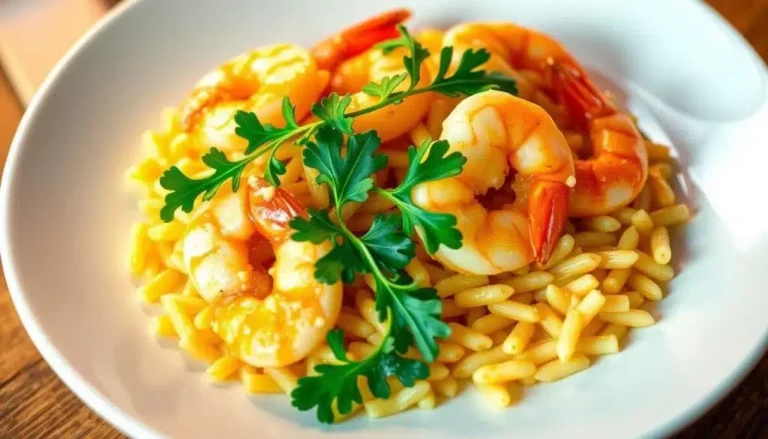
- Shrimp skewers brushed with garlic butter
Sides That Bring the Symphony Together
Imagine Sweet and Nutty Moroccan Couscous with:
- Crispy fried plantains for extra caramel notes
- Cucumber-tahini salad with sumac
- Roasted red pepper and walnut salad
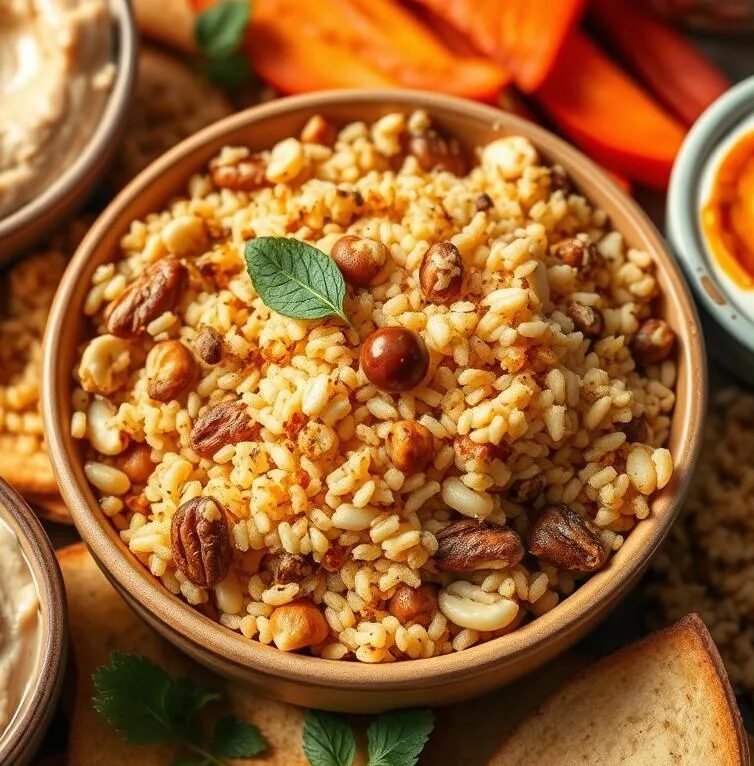
Don’t forget a small bowl of labneh yogurt with date syrup. It’s a game-changer.
Pair it with warm pita bread for a fun twist. For crunch, add toasted pine nuts or pumpkin seeds. This dish is all about balance—sweet, salty, tangy, and earthy.
Storing and Reheating Couscous
Let’s dive into keeping your Easy Moroccan Couscous fresh and tasty for a long time. Meal prep fans know how key smart storage is. This Healthy Couscous recipe is perfect for planning ahead. As our Healthy Couscous recipe guide says, separating parts keeps it fresh.
Best Storage Practices
- Keep cooked couscous and veggies in separate airtight containers.
- Refrigerate for up to 3 days or freeze for 3 months—don’t forget to mark the date!
- Whole grains like couscous stay best when stored below 40°F (4°C).
Reheating Without Sacrificing Quality
- Stovetop: Add a splash of broth, cover, and stir gently over low heat.
- Microwave: Toss with 1-2 tsp water, microwave in 30-second bursts, and stir often.
- Oven: Spread in a greased dish, drizzle with olive oil, and bake at 300°F for 10-15 minutes.
Pro tip: Freeze in single servings for quick thawing. Thaw overnight in the fridge before reheating. This keeps the dish’s flavors—like lemony zests and caramelized nuts—bright.
Remember, couscous keeps its nutrients best when reheated gently.
Variations to Try
Here are my favorite ways to personalize your Couscous with almonds and apricots.

Vegetarian and Vegan Options
Make this dish a Vegetarian Moroccan Couscous by using vegetable stock instead of chicken broth. Add chickpeas or harissa-spiced tofu for extra protein. Mix in roasted beets or lentils for a hearty, plant-based meal that’s full of texture.
Adding Seasonal Ingredients
- Spring: Brighten with peas, asparagus, or fresh herbs like cilantro.
- Summer: Add grilled zucchini or tomatoes for a light, sun-kissed feel.
- Winter: Roasted root vegetables like carrots or parsnips add deep, earthy warmth.
Spicy vs. Sweet: Finding Your Balance
Love heat? Stir in a dash of harissa or cayenne to contrast the sweetness of apricots. Prefer something sweeter? Add dried figs or a drizzle of honey. My go-to? A sprinkle of toasted almonds and a squeeze of lemon balances it all beautifully.
Conclusion and Serving Suggestions
Every grain of Sweet Couscous and Nutty Couscous in this dish carries the warmth of centuries-old traditions. This recipe isn’t just about ingredients—it’s a bridge to the communal spirit of Moroccan meals.
Final Thoughts on Enjoying This Dish
Eat slowly and let the blend of toasted nuts and dried fruits remind you of the care woven into every step. The crunch of almonds, the warmth of cinnamon, and the tender couscous grains all celebrate the art of mindful eating. When served at gatherings, it becomes more than a meal; it’s a moment to pause and appreciate the joy of breaking bread together.
How to Present Couscous for Guests
Arrange it in a wide bowl or shallow dish to showcase its golden hues. Top with a sprinkle of toasted sesame seeds and a drizzle of argan oil for a touch of authenticity. For a vibrant finish, scatter pomegranate arils or chopped pistachios. Serve alongside a small dish of harissa for those who crave a spicy contrast. Traditional Moroccan tables often layer dishes, so place the couscous beside tagines or salads to echo the colorful chaos of a souk stall. Consider draping a woven cloth over the bowl during Ramadan to keep it warm, a subtle nod to its cultural roots.
FAQ
What type of couscous is best for this recipe?
For the Sweet and Nutty Moroccan Couscous, use traditional Moroccan couscous. It’s the smallest variety and soaks up flavors well. Israeli (pearl) couscous is also good for a chewier texture. Just remember to adjust cooking times.
Can I make this recipe vegan?
Yes, you can! This Vegetarian Moroccan Couscous is vegan if you use vegetable broth instead of chicken broth. Adding roasted chickpeas or harissa-spiced tofu boosts protein and flavor.
How do I store leftovers?
Keep leftovers in an airtight container in the fridge for up to 4 days. Keep couscous and sweet mixture separate to keep it fluffy. Mix them just before serving for the best taste.
What proteins pair well with Moroccan Couscous?
Many proteins go well with this dish. For meat lovers, try chicken tagine, lamb meatballs, or grilled fish. Vegetarians can enjoy it with chickpeas or harissa-roasted tofu.
How can I enhance the flavor of my couscous?
To make your couscous taste better, use broth instead of water for cooking. Toast your spices and nuts before adding them. Add fresh herbs and a squeeze of lemon juice just before serving. This will make the dish even more flavorful!
Can I add different vegetables to this dish?
Yes, you can! Adding seasonal vegetables like grilled zucchini in summer or roasted butternut squash in fall is great. It adds flavor and nutrition.
What’s the best way to reheat couscous?
To reheat couscous well, add a bit of water or broth before heating. This creates steam that keeps it moist. Reheat on the stovetop or in the microwave with a damp paper towel to cover.
Can I use different types of nuts and dried fruits?
Certainly! While almonds and apricots are traditional, try pistachios or walnuts and cranberries or figs. Adjust the amounts to find your perfect mix of sweet and nutty.