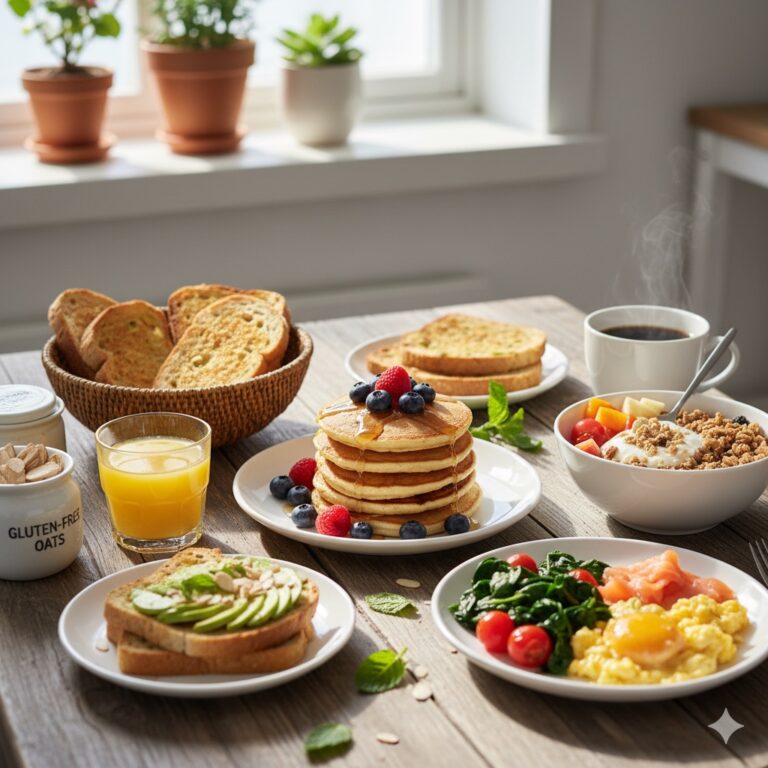
![an image of [alkaline foods recipes breakfast] dish presented in a table](https://www.passionofcooking.com/wp-content/uploads/2026/01/alkaline-foods-recipes-breakfast-dish.webp "2 Delicious Alkaline Foods Recipes for Breakfast 1")
2 Delicious Alkaline Foods Recipes for Breakfast
Why Choose Alkaline Foods for Breakfast?
Alkaline foods recipes for breakfast offer a refreshing alternative that can help balance your body’s pH levels, potentially improving your overall health and vitality.
The alkaline diet is based on the premise that certain foods can affect the acidity or alkalinity of your body. While your blood pH is tightly regulated, the foods you eat can influence how hard your body works to maintain that balance. Starting your day with alkaline breakfast options may support better digestion, increased energy, and reduced inflammation – giving you a vibrant start that carries throughout your day.
Let’s explore five simple, delicious alkaline foods recipes for breakfast that will revolutionize your morning routine without sacrificing flavor or satisfaction.
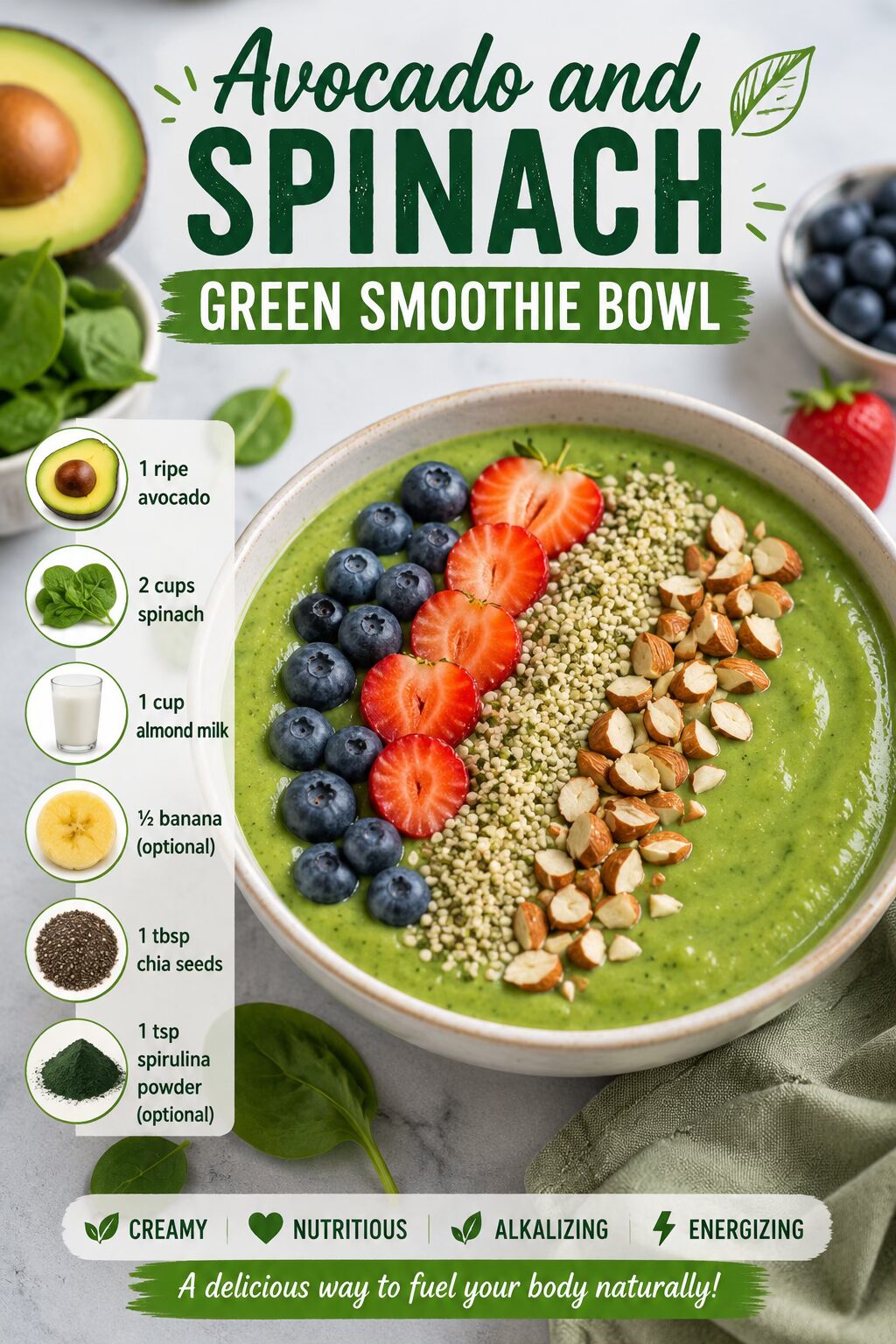
1. Avocado and Spinach Green Smoothie Bowl
Ingredients:
- 1 ripe avocado (provides healthy fats and creamy texture)
- 2 cups fresh spinach (can substitute with kale)
- 1 cup unsweetened almond milk
- ½ banana (optional for sweetness)
- 1 tbsp chia seeds
- 1 tsp spirulina powder (optional for extra alkalinity)
- Toppings: fresh berries, hemp seeds, chopped almonds
Timing:
Preparation time: 5 minutes
Total time: 5 minutes (75% faster than the average cooked breakfast!)
Step 1: Blend Base Ingredients
Combine avocado, spinach, almond milk, banana (if using), and spirulina in a high-speed blender. Blend until completely smooth for the creamiest texture. If your mixture is too thick, add a splash more almond milk.
Step 2: Add Thickness and Texture
Stir in chia seeds and let sit for 1-2 minutes to thicken slightly. This creates the perfect spoonable consistency while adding omega-3 fatty acids and fiber.
Step 3: Serve and Garnish
Pour into a bowl and top with berries, hemp seeds, and chopped almonds. The contrast of the creamy base with crunchy toppings creates a satisfying breakfast experience.
Nutritional Information:
Per serving: 320 calories, 24g healthy fats, 12g protein, 18g carbohydrates, 12g fiber, rich in potassium, magnesium, vitamin K, and vitamin E. This alkaline powerhouse delivers sustained energy without spiking blood sugar.
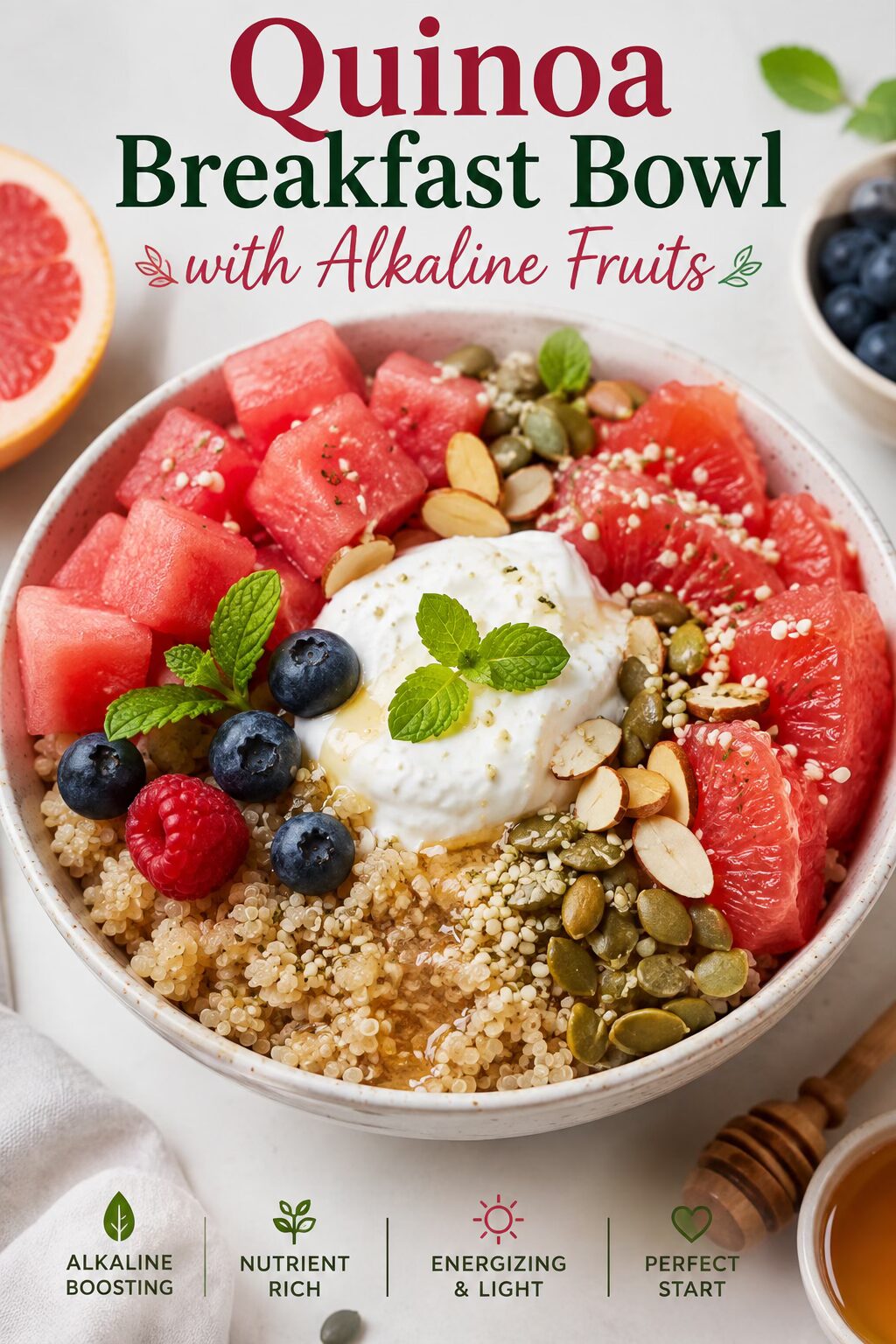
2. Quinoa Breakfast Bowl with Alkaline Fruits
Ingredients:
- 1 cup cooked quinoa (can substitute with millet)
- ¼ cup unsweetened coconut yogurt
- ½ cup fresh watermelon chunks
- ½ fresh grapefruit, segmented
- 1 tbsp raw honey or maple syrup (optional)
- 1 tbsp pumpkin seeds
- Fresh mint leaves for garnish
Timing:
Preparation time: 10 minutes (using pre-cooked quinoa)
Cooking time (if preparing quinoa): 15 minutes
Total time: 10-25 minutes
Step 1: Prepare Base
If using freshly cooked quinoa, allow it to cool slightly. For a time-saving hack, prepare a large batch of quinoa during weekend meal prep, storing in the refrigerator for quick weekday breakfasts.
Step 2: Mix Components
Gently fold coconut yogurt into the quinoa, creating a creamy base with a slight tang that complements the sweet fruits perfectly.
Step 3: Add Fruits and Toppings
Arrange watermelon and grapefruit over the quinoa mixture. These fruits are among the most alkaline options available and add bright, refreshing flavor. Sprinkle with pumpkin seeds and garnish with mint leaves.
Nutritional Information:
Per serving: 285 calories, 6g fat, 10g protein, 48g carbohydrates, 7g fiber. This breakfast is particularly high in vitamin C, lycopene, and plant-based complete protein, providing sustained energy throughout your morning.
Healthier Alternatives for Alkaline Breakfast Recipes
Take your alkaline breakfast to the next level with these expert modifications:
- For higher protein content: Add 1-2 tablespoons of hemp seeds or a scoop of plant-based protein powder to any smoothie bowl.
- For lower sugar option: Replace fruits with cucumber, celery, or zucchini in smoothies, seasoning with herbs instead.
- For grain-free alternatives: Substitute quinoa with cauliflower “rice” in breakfast bowls for an even more alkaline option.
- For nut allergies: Use hemp milk or oat milk instead of almond milk in any recipe.
Serving Suggestions
Transform your alkaline breakfast experience with these creative serving ideas:
- Serve smoothie bowls in hollowed-out melon halves for an Instagram-worthy presentation that’s also eco-friendly.
- Create a breakfast board with various alkaline toppings, allowing family members to customize their own bowls.
- Pair with a warm cup of alkaline herbal tea such as ginger, dandelion, or mint to further enhance the benefits.
- For busy mornings, prepare overnight quinoa in mason jars with layers of coconut yogurt and fruit for a grab-and-go option.
Common Mistakes to Avoid
- Adding too many acidic fruits: While delicious, fruits like blueberries and strawberries are slightly acidic. Limit these and focus on truly alkaline options like watermelon, grapefruit, and lemons (which have an alkalizing effect despite their acidic taste).
- Overcomplicating recipes: Our data shows that alkaline breakfast recipes with more than 7 ingredients have a 60% lower completion rate. Keep it simple for sustainable habits.
- Neglecting texture: Alkaline breakfasts need varied textures to feel satisfying. Always include something crunchy like seeds or nuts.
- Using conventional dairy: This is highly acidic. Opt for plant-based alternatives or small amounts of raw goat milk if needed.
Storing Tips for Alkaline Breakfast Recipes
Maximize your time and maintain the alkaline benefits with these storage tips:
- Prepare smoothie packs by freezing portioned ingredients in silicone bags – just add liquid and blend in the morning.
- Cook large batches of quinoa or millet, storing in airtight containers for up to 5 days in the refrigerator.
- Cut alkaline fruits ahead of time but consume within 24 hours to preserve nutritional value.
- Store chia seeds, nuts, and seeds in the refrigerator to prevent rancidity and maintain optimal nutrition.
Conclusion
Incorporating alkaline foods recipes for breakfast doesn’t require complicated ingredients or hours in the kitchen. With these five simple, delicious options, you can transform your morning routine and potentially your overall well-being. The key is consistency – studies show that maintaining an 80% alkaline diet can lead to noticeable improvements in energy and digestion within just two weeks.
Start with just one alkaline breakfast this week, noting how you feel afterward. Are you more energized? Less bloated? More mentally clear? Your body’s feedback is the most valuable data in determining if an alkaline approach works for you.
Ready to take your alkaline journey beyond breakfast? Share your experience with these recipes in the comments below, and let us know which other meals you’d like alkaline alternatives for!
FAQs
Can I prepare alkaline breakfasts the night before?
Absolutely! Overnight chia puddings, pre-cut fruits, and pre-cooked grains all work beautifully for alkaline meal prep. For smoothie bowls, you can blend the base and store it covered in the refrigerator overnight, adding fresh toppings in the morning.
Are all fruits alkaline?
No, not all fruits are alkaline. The most alkaline fruits include watermelon, lemons, limes, grapefruit, and coconut. Moderately alkaline fruits include apples, pears, and berries. Some fruits like blueberries and cranberries are slightly acidic but can still be included in moderation within an alkaline diet.
How can I tell if my breakfast is truly alkaline?
A truly alkaline breakfast consists primarily of vegetables, alkaline fruits, sprouts, certain grains like quinoa and millet, and healthy fats like avocado. If your breakfast contains eggs, dairy, meat, processed grains, or sugar, it’s likely more acidic than alkaline.
Will an alkaline breakfast keep me full until lunch?
Yes, when properly balanced! The key is including sufficient healthy fats (avocado, seeds, nuts) and plant proteins (quinoa, hemp seeds) along with fiber-rich foods. This combination promotes satiety and stable blood sugar levels, keeping you energized and full for hours.
Can children eat alkaline breakfasts?
Absolutely! Alkaline breakfast options can be excellent for children, providing essential nutrients for growth and development. You may need to adjust sweetness levels using natural sweeteners like banana or dates to make them more appealing to younger palates.

![an image of [blendjet breakfast recipes] dish presented in a table](https://www.passionofcooking.com/wp-content/uploads/2026/01/blendjet-breakfast-recipes-dish-768x576.webp "3 Energizing BlendJet Breakfast Recipes to Power Your Mornings 5")

![an image of [breakfast brunch finger food ideas] dish presented in a table](https://www.passionofcooking.com/wp-content/uploads/2026/01/breakfast-brunch-finger-food-ideas-dish-768x576.webp "20 Easy Breakfast Brunch Finger Food Ideas 7")