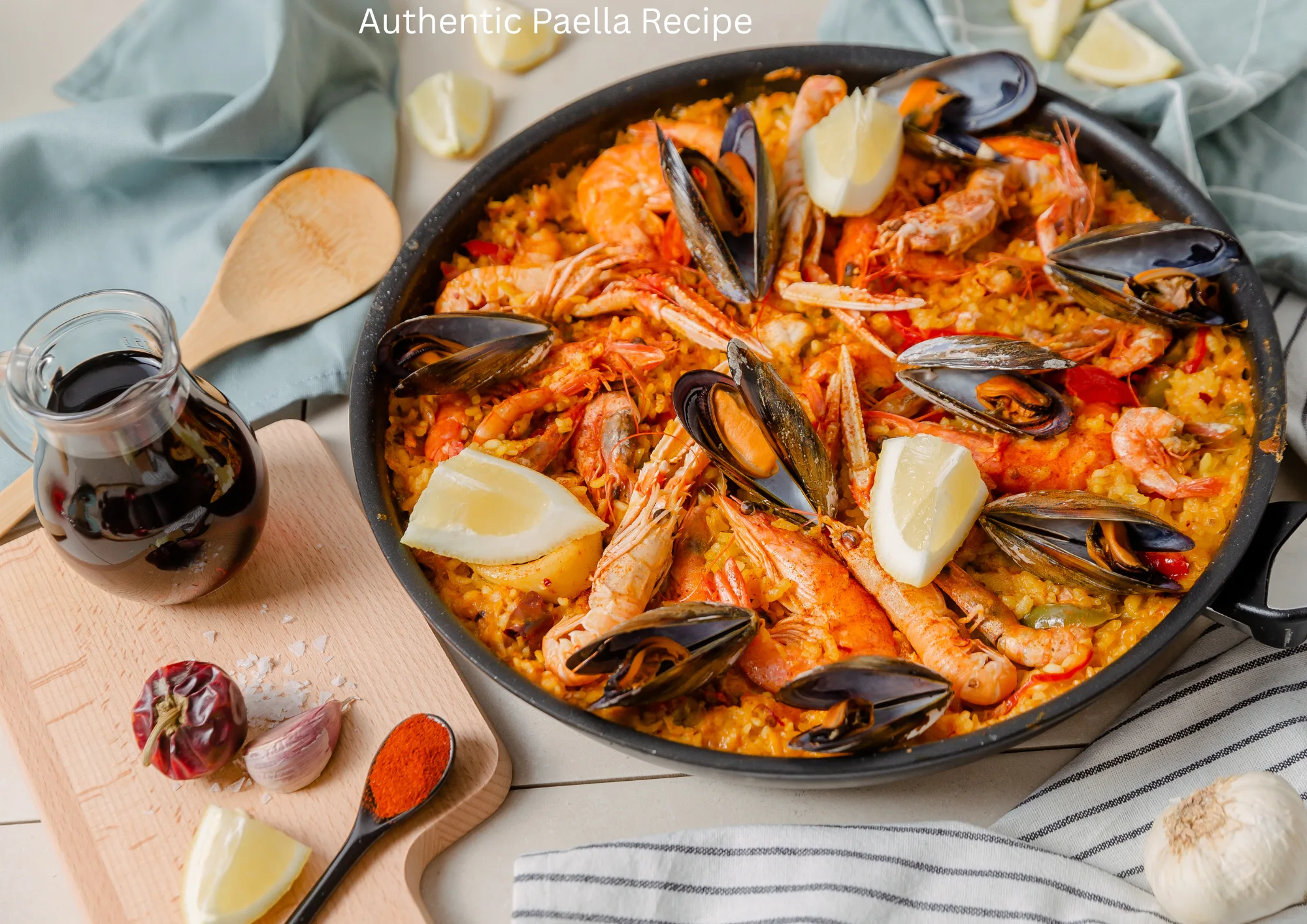
Authentic Paella Recipe
A steaming paella pan brings people together, whether it’s a family gathering or a cozy dinner. I fell in love with traditional Spanish paella in Valencia. The scent of saffron and olive oil felt like a hug.
This paella recipe comes from Valencia, where every grain of Bomba rice soaks up the Mediterranean’s essence. It has the earthy taste of chorizo and the bright flavor of saffron. It’s a dish that makes you slow down and enjoy life’s simple moments.
FAQ
What is authentic paella?
Authentic paella is a traditional Spanish dish from Valencia. It mixes short-grain rice with seafood, chicken, rabbit, and veggies. Saffron and a special cooking method give it a unique flavor.
What types of rice are best for making paella?
Bomba rice is the top choice for paella. It soaks up liquid well but stays firm. Arborio rice is a good substitute, but it won’t be as authentic.
Do I need a special paella pan to cook paella?
You don’t need a special paella pan to make great paella at home. A wide, shallow skillet works well. The key is to have enough space for even cooking.
What is the importance of saffron in paella?
Saffron is key to paella’s flavor and golden color. It’s a unique spice that can’t be replaced. So, it’s worth investing in good saffron.
Can I make paella vegetarian?
Yes! You can make a tasty vegetarian paella with lots of veggies and vegetable stock. It’s a great way to enjoy the region’s fresh produce.
How do I know when my paella is done cooking?
Your paella is ready when the rice is tender and has soaked up most of the liquid. Listen for a crackling sound at the bottom of the pan. This means the socarrat is forming.
What are some common mistakes to avoid when making paella?
Avoid overcrowding the pan, skipping saffron, and stirring too much after adding liquid. Also, don’t rush the cooking time. These tips will help you make a perfect paella.
What wine pairs well with seafood paella?
A crisp Albariño from Spain’s northwestern coast pairs well with seafood paella. For meaty versions, a Spanish tempranillo or Verdejo works great.
How should I serve and present my paella?
Serve paella straight from the pan for a fun dining experience. Add fresh lemon wedges, parsley, and roasted red peppers for a nice presentation.
Can I experiment with different ingredients in my paella?
Yes! Paella is all about trying new things. Add unique veggies, seafood, or proteins to make it your own. It’s all about creativity!
What is Paella?
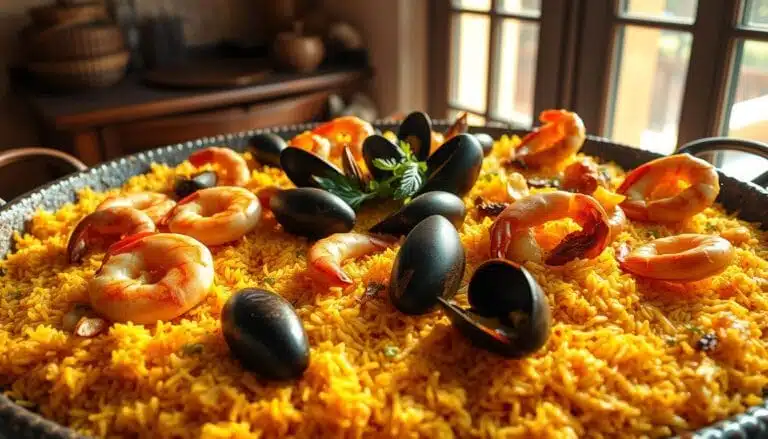
When I first learned about traditional Spanish paella, I was amazed. This dish tells a story of community and resourcefulness.
The History of Paella
Valencia paella’s story started in the 18th century. Workers mixed local ingredients like rabbit, chicken, and saffron in paelleras. By the 1960s, tourism made it famous worldwide. In 2001, a massive Valencia paella was made, 21 meters wide, using 1kg of saffron.
Regional Variations
Every region adds its own twist to this dish:
- Valencian classics: rabbit, chicken, or snails in the original Valencia paella.
- Coastal twists: mussels, shrimp, and squid in seafood versions.
- Mixed paella: blending meats and seafood, popular in cities like Barcelona.
Choosing the right pan is key! Here’s a guide to sizing:
| Pan Size | Servings |
|---|---|
| 40 cm (15.5″) | 3 people |
| 55 cm (21.5″) | 5 people |
| 65 cm (25.5″) | 7 people |
| 90 cm (35″) | 12 people |
Key Ingredients for Authentic Paella
For authentic Spanish cuisine, picking the right ingredients is key.
Types of Rice to Use
Bomba rice is the top choice—it soaks up broth without getting mushy. Arborio rice is a good backup, but it won’t have the same texture. Here’s what you need to know:
- Bomba rice: Perfect for seafood paella or chicken and chorizo paella
- Arborio: A creamy substitute
- Valencian rice: A favorite for traditionalists
Essential Spices
Saffron is a must—it gives a golden color and a unique smell. Just crush it to release its flavor. Add:
- Smoked paprika for depth
- Garlic and onion for a strong base
- Tomato paste to balance the dish
Fresh Seafood vs. Meat
Decide between the salty taste of shrimp and mussels in seafood paella, or the smoky flavor of chorizo and chicken in chicken and chorizo paella. Or mix them for a mix of tastes!
| Traditional Valencian Essentials | Quantities |
|---|---|
| Bomba rice | 440g |
| Saffron | 0.4g |
| Chicken | 400g |
| Chorizo | 200g |
| Green beans | 100g |
| Beans (garrofón) | 150g |
Quality is important. Fresh mussels should open in 4 minutes. If not, throw them away. Let’s make paella that warms your heart, one ingredient at a time.
Cooking Equipment Needed
When making homemade paella, the right tools are crucial.
The Perfect Paella Pan
Traditionalists love a carbon steel paellera, like the Garcima Pata Negra (16-inch). It’s strong and affordable. For beginners, a 12-inch cast iron skillet is great for 2–3 servings. Look for these features:
- Width: 12–15 inches for home use
- Shallow sides for even heat distribution
- Compatibility with your stove type
| Pan Size (inches) | Serves |
|---|---|
| 12 | 2–3 |
| 15 | 4–6 |
| 18+ | 6+ |
Other Kitchen Tools
A good knife and cutting board are essential for chopping veggies and proteins. I also suggest:
- Wooden spoon for stirring ingredients
- Heat-resistant gloves when handling hot pans
- Measuring cups for liquid precision
Carbon steel pans like the IMUSA need care—season them before use and dry them well after washing. Even a basic stainless steel skillet will do! The key to great homemade paella is confidence, not perfection.
Step-by-Step Guide to Making Paella
Preparing the Ingredients
Start by gathering your treasures. Chop onions and peppers into slender ribbons. Mince garlic until fragrant. If using shrimp, reserve the shells to infuse the broth. I recommend soaking saffron threads in warm water for 10 minutes to unlock its golden magic. Here’s a quick checklist:
- Measure 1 cup of bomba rice—its starch holds the flavors.
- Soak saffron and set aside.
- Rinse rice lightly to remove excess starch.
Cooking the Base
Heat olive oil in your paella pan over medium heat. Brown chorizo slices until they singe at the edges—this adds depth. Next, create the sofrito:
- Add onions and garlic, stirring until translucent.
- Stir in bell peppers and tomato paste until fragrant.
- Layer in peas and spices, then pour in the rice, toasting it for 2–3 minutes.
Layering Flavors
Now comes the alchemy. Pour the saffron-infused broth slowly, letting it absorb into the rice. Arrange seafood or protein on top—think shrimp curled like crescent moons, mussels nestled between grains. Bake at 375°F for 20 minutes, then finish on the stovetop to achieve that coveted socarrat crust. Wait 5 minutes before serving—this rest lets flavors marry.
| Step | Action | Time |
|---|---|---|
| Broth Prep | Simmer broth with saffron | 10 mins |
| Sofrito | Cook veggies until caramelized | 8 mins |
| Baking | Cook in oven at 375°F | 20 mins |
Tips for Perfecting Your Paella
Let’s turn your kitchen into a Valencia-inspired stage for the best paella recipe yet.
Striking the Right Balance of Flavors
Start by toasting saffron threads in olive oil to unlock its honeyed aroma. For the homemade paella, balance bold chorizo’s smokiness with fresh lemon zest before serving.
Remember, seafood varieties thrive with a splash of citrus, while rabbit or chicken call for a dash of paprika.
Achieving the Ideal Texture
| Rice Type | Liquid Absorption | Texture Result |
|---|---|---|
| Bomba | 3x liquid | Crisp socarrat with fluffy grains |
| Calasparra | 2.5x liquid | Slightly chewy, nutty undertones |
Use a wide paella pan to spread rice evenly. Once simmering, resist stirring—it’s the key to that coveted socarrat. When the edges begin to caramelize, you’ll know you’ve got the sweet spot of a perfect crust.
Timing is Everything
Cooking phases matter. Follow this rhythm: 8 minutes on high heat to steam, then 8 minutes low to set the grains. When adding shrimp or mussels, wait until the final 5 minutes so they stay tender.
After cooking, let it rest 10 minutes—this resting time lets flavors marry. Need inspiration? Chef Joan Casas achieves this magic daily in Mexico’s Mercado Sano, where patience meets passion.
Common Mistakes to Avoid
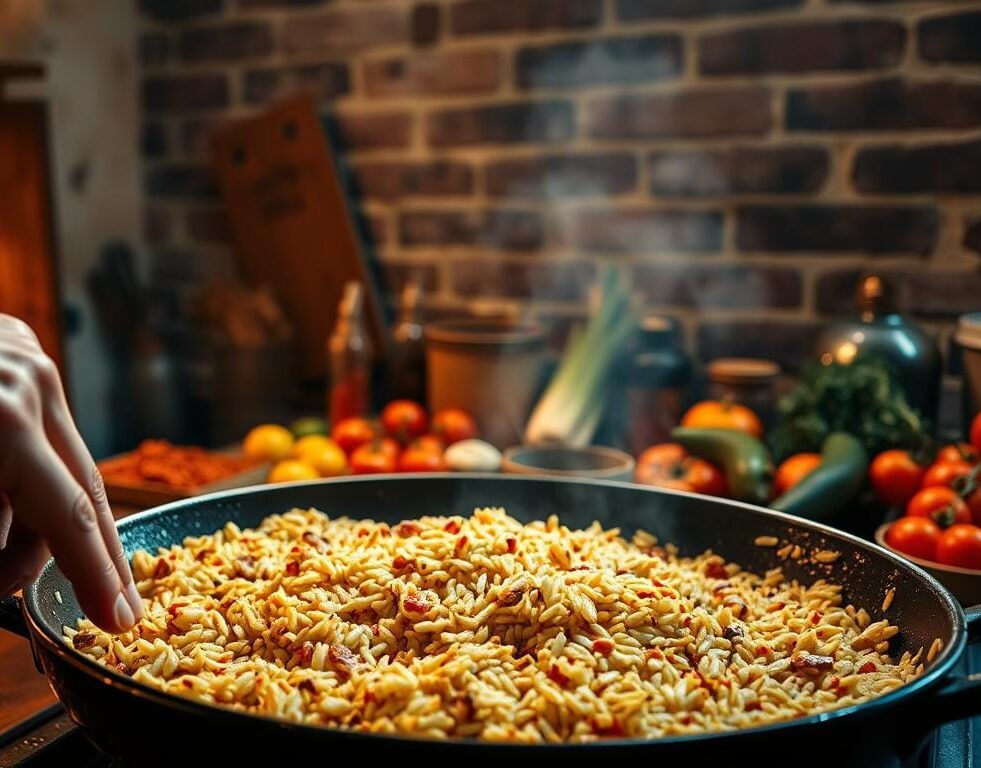
First, overcrowding the pan ruins the signature socarrat crust. A wide, shallow pan lets steam escape, so if your group is large, cook in batches. I use a 16-inch skillet to give ingredients room to breathe.
- Overcrowding the Pan: Use a wide pan—Bomba rice needs space to cook evenly.
- Skipping Saffron: A pinch (1 tsp) adds golden flavor without bitterness. Too much turns it bitter.
- Stirring Too Much: Unlike risotto, paella recipe needs minimal stirring to avoid mushy rice.
- Wrong Rice: Long-grain rice won’t absorb broth properly—opt for Bomba or Calasasparra.
- Rushing Heat: Medium heat and patience build that perfect crispy layer at the bottom.
| Mistake | Fix |
|---|---|
| Adding all ingredients at once | Layer them step by step for balanced cooking |
| Using regular broth | Warm broth ensures even absorption |
| Skipping resting time | Let it sit 5 minutes post-cook for flavors to meld |
Pairing Suggestions for Paella
When you serve traditional Spanish paella, the right pairings make it a true celebration.
- Meat-centric paella: Choose bold reds like Ribera del Duero Tempranillo.
For sides, keep it simple to let the paella recipe be the star. My top picks are:
| Category | Options | Why It Works |
|---|---|---|
| Sides | Tomato salad with sherry vinegar | Crisp acidity balances rich rice |
| Breads | Garlic bread, crusty baguette | Sops up every flavorful grain |
| Starters | Potato-based patatas bravas or Spanish tortilla | Classic tapas-style starters |
| Desserts | Flan or churros with chocolate | Sweet endings that don’t overpower |
Authentic Spanish cuisine is all about balance. A bit of fresh parsley or lemon adds freshness without adding complexity.
Serving and Presentation Tips
Nothing completes your traditional Spanish paella recipe journey like a beautiful presentation. Here’s how to make your dish shine:
Traditional Serving Styles
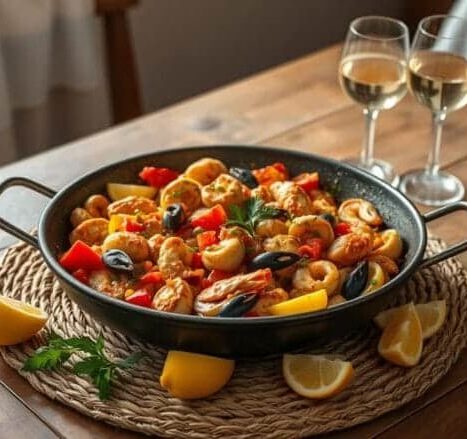
Follow the authentic paella recipe tradition by placing the pan directly on the table. Share it communally—this dish was meant to bring people together. Use a wooden board beneath the pan to protect surfaces. For a rustic touch, carve the rice into wedges like a pie before serving.
Remember the prized traditional Spanish paella crust (socarrat) at the bottom? Always leave it intact for those who love its crispy texture.
- Share boldly: Serve family-style to honor its roots.
- Protect the pan: Use a heat-safe trivet or board.
- Highlight socarrat: Let guests know the crispy layer is a prized treat!
Garnishing Ideas
Drizzle extra virgin olive oil over the rice for richness. Add fresh lemon wedges on the side—they brighten the dish’s earthy flavors. Here’s how to elevate visually:
- Color pop: Sprinkle chopped parsley or cilantro.
- Artistic flair: Arrange mussels or shrimp shells around the edge like a floral border.
- Edible art: Top with a single nasturtium or calendula flower for a delicate touch.
Timing matters most. Serve immediately after cooking—rice firms up as it cools. Always check the pan’s handle is cool before moving.
Popular Variations of Paella
Seafood Paella
This coastal classic shines with the ocean’s bounty. Imagine a pan full of plump shrimp, tender squid rings, and mussels. The briny freshness blends beautifully with saffron’s golden warmth.
In coastal towns like Denia, cooks often use local catches like razor clams or langoustines. This adds an extra special touch.
Mixed Paella with Meat and Fish
For those craving both land and sea, mixed paella recipe is a flavor adventure. Chicken and smoky chorizo star alongside prawns and mussels, creating layers of taste. I love how the chorizo’s paprika-rich flavor dances with the seafood’s sweetness.
| Variation | Signature Flavors | Iconic Ingredients |
|---|---|---|
| Seafood Paella | Briny & crisp | Shrimp, mussels, squid |
| Chicken & Chorizo Paella | Smoky & savory | Chicken, chorizo, paprika |
Conclusion
Whether you’re making authentic paella recipe or your own homemade paella, each rice grain holds history. This recipe, perfect for 5 people, offers 240 calories of history in every bite.
Encouragement to Experiment
But don’t be afraid to get creative! Just like halal meals bring people together, your paella recipe can too. Try using shrimp instead of rabbit or add fresh veggies. Each change celebrates the dish’s flexibility.
With just 15 minutes of prep and 35 minutes of cooking, you can create something amazing.

![an image of [tajin chamoy] dish presented in a table](https://www.passionofcooking.com/wp-content/uploads/2026/01/tajin-chamoy-dish-768x576.webp "Tajin Chamoy: The Vibrant Mexican Condiment Combination 5")